
Claude, ChatGPT, Gemini: which AI tool actually helps small businesses most in 2025?
Claude, ChatGPT, Gemini: which AI tool actually helps small businesses most in 2025?
The question most UK small business owners are now asking is not whether to use AI — it is which one to actually use. ChatGPT, Claude, and Gemini dominate the conversation, and each one has genuine advocates who swear it is the best. The reality is more nuanced: each tool has different strengths, and the right choice depends entirely on what you need it to do for your business.
According to the British Chambers of Commerce, 35% of UK SMEs were actively using AI by 2025, up from 25% the year before. That number is growing fast. But adoption is only useful if the tool you choose actually matches your working day. This guide cuts through the noise and gives you a practical, task-by-task breakdown of the best AI tools for small businesses in the UK — so you can make an informed decision rather than just following the hype.
What are ChatGPT, Claude, and Gemini?
All three are AI assistants powered by large language models. You interact with them through a chat interface — you type a question or instruction, and they respond with text, code, analysis, or suggestions. The differences lie in what each model is optimised for and how it integrates with other tools.
ChatGPT (OpenAI)
ChatGPT is the most widely known AI assistant and the one that started the mainstream adoption wave. Built on OpenAI’s GPT-4 architecture, it is versatile and handles a wide range of tasks well. It has a large ecosystem of integrations, supports image generation through DALL-E, offers voice interaction, and allows users to create custom versions (Custom GPTs) for specific tasks. Paid plans start at $20 per month. For most small businesses, ChatGPT is the logical starting point because of its breadth.
Claude (Anthropic)
Claude is built by Anthropic with a focus on safety, accuracy, and thoughtful responses. It is particularly strong on long-form writing, complex analysis, and handling large documents — its context window (the amount of text it can process at once) is significantly larger than ChatGPT’s. Claude tends to be more cautious about stating things it is uncertain of, which makes it more reliable for sensitive or detailed work. Paid plans also start at $20 per month. For UK small businesses that do a lot of writing, research, or document-heavy work, Claude is worth serious consideration.
Gemini (Google)
Gemini is Google’s AI assistant, and its standout feature is its deep integration with Google Workspace — Gmail, Google Docs, Sheets, Calendar, and Drive. It also has real-time access to current web information, which neither ChatGPT nor Claude offers by default. If your business runs on Google tools and you frequently need up-to-date information, Gemini has a practical advantage the others struggle to match. Google One AI Premium, which includes Gemini Advanced, costs around £19.99 per month.
How do they compare for the tasks that actually matter?
Rather than comparing abstract capabilities, the most useful way to look at this is task by task. Here is how all three perform on the things UK small businesses use AI for most.
| Task | ChatGPT | Claude | Gemini |
|---|---|---|---|
| Writing content (blogs, emails, copy) | ⭐⭐⭐⭐ | ⭐⭐⭐⭐⭐ | ⭐⭐⭐ |
| Research and fact-finding | ⭐⭐⭐ | ⭐⭐⭐ | ⭐⭐⭐⭐⭐ |
| Data analysis (spreadsheets) | ⭐⭐⭐⭐ | ⭐⭐⭐ | ⭐⭐⭐⭐⭐ |
| Code generation and debugging | ⭐⭐⭐⭐⭐ | ⭐⭐⭐⭐ | ⭐⭐⭐ |
| Creative brainstorming and ideas | ⭐⭐⭐⭐⭐ | ⭐⭐⭐⭐ | ⭐⭐⭐ |
| Email drafting (in Gmail/Workspace) | ⭐⭐⭐ | ⭐⭐⭐⭐ | ⭐⭐⭐⭐⭐ |
| Handling large documents / contracts | ⭐⭐⭐ | ⭐⭐⭐⭐⭐ | ⭐⭐⭐ |
| Strategic analysis and planning | ⭐⭐⭐⭐ | ⭐⭐⭐⭐⭐ | ⭐⭐⭐⭐ |
| Image generation | ⭐⭐⭐⭐⭐ | ✗ | ⭐⭐⭐ |
| Accuracy on current events / news | ⭐⭐ | ⭐⭐ | ⭐⭐⭐⭐⭐ |
ChatGPT: best for versatile, everyday AI work
ChatGPT is the most versatile of the three. It handles almost any task competently, generates images, supports voice interaction, and has the broadest range of integrations. If you want one tool that does a reasonable job of most things, ChatGPT is the most logical choice — particularly for businesses that are new to AI and want to experiment before committing to a workflow.
It is especially strong for creative work. When you need to brainstorm campaign ideas, write social media content, draft product descriptions, or think through a problem in a conversational way, ChatGPT is consistently fast and energetic in its responses.
Where it falls slightly short is on depth. For detailed analysis, long documents, or nuanced writing that requires real precision, it can be outperformed by Claude. And for research requiring current information, it can present outdated data with misplaced confidence unless you specifically enable its web browsing feature. These limitations matter less if your main uses are creative, conversational, or code-related — areas where ChatGPT genuinely excels as one of the best AI productivity tools for business.
Best for:
- Social media content, marketing copy, product descriptions
- Brainstorming and creative ideation
- Code generation and debugging for technical tasks
- General-purpose AI use across multiple task types
- Image creation for marketing materials (via DALL-E)

Claude: best for writing, analysis, and complex documents
Claude is the quiet achiever of the three. It is less flashy than ChatGPT and less integrated than Gemini, but for the specific tasks that matter most to many UK small businesses — writing that needs to actually be good, analysis that requires nuance, and working with long documents — it consistently outperforms both.
The most practical advantage Claude has is its context window. Where ChatGPT might struggle with a 50-page contract or a long set of client notes, Claude can handle significantly more text at once and reason coherently about all of it. For businesses that need to analyse terms and conditions, produce detailed reports, or work through complex client briefs, this is a material difference.
Claude is also notably more careful about what it claims. Rather than stating uncertain information confidently, it tends to flag its limitations — a small thing, but important when you are relying on AI output for business decisions. For UK small businesses comparing the three tools for serious AI productivity in business contexts, Claude’s caution is a feature, not a bug.
Best for:
- Blog posts, reports, proposals, and long-form business writing
- Reviewing and summarising contracts, legal documents, or lengthy briefs
- Strategic analysis and nuanced business thinking
- Email drafting that needs a professional, considered tone
- Businesses handling sensitive documents where accuracy matters
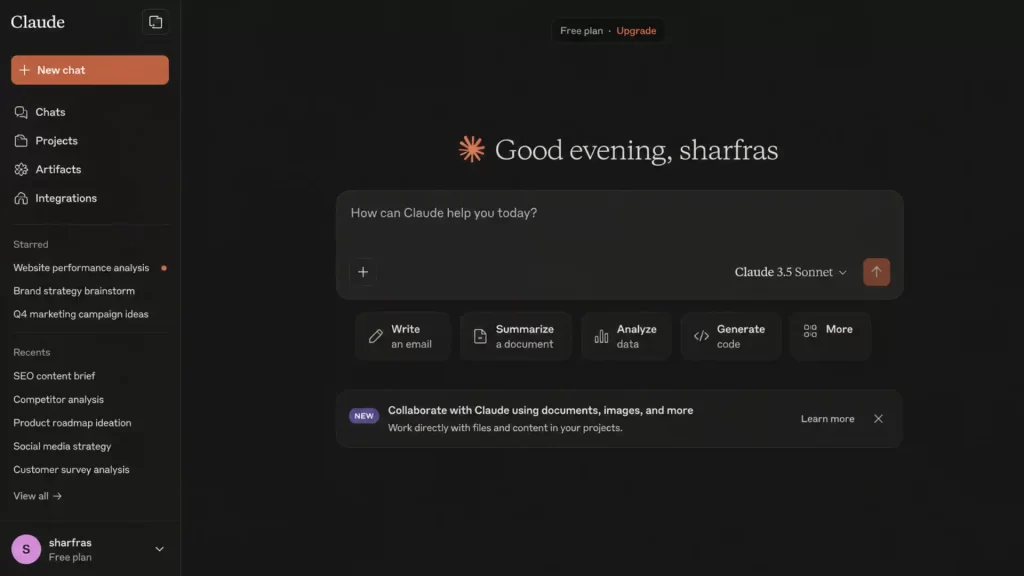
Gemini: best for Google Workspace businesses and current research
If your business runs day to day on Gmail, Google Docs, and Google Sheets, Gemini’s advantage over the other two is straightforward: it works natively inside the tools you already use. You can ask it to draft an email while you are reading one, analyse a spreadsheet without copying data into a chat window, or summarise a document in Google Docs without switching applications.
Its second major advantage is real-time information. Both ChatGPT and Claude have knowledge cutoffs and can present outdated information confidently. Gemini, by contrast, has live web access built in and cites its sources with links. For research tasks — checking on competitors, looking up pricing, understanding recent market changes — this is a significant practical advantage.
Where Gemini lags behind is creative depth and analytical nuance. Its responses can be more functional than inspired, and it tends to describe situations rather than make bold, strategic recommendations. For pure writing quality or complex reasoning, most users find Claude or ChatGPT more satisfying.
Best for:
- Businesses that use Google Workspace as their primary platform
- Research tasks that require current, cited information
- Data analysis directly in Google Sheets
- Email drafting integrated within Gmail
- Teams that want a single subscription covering Google storage and AI together
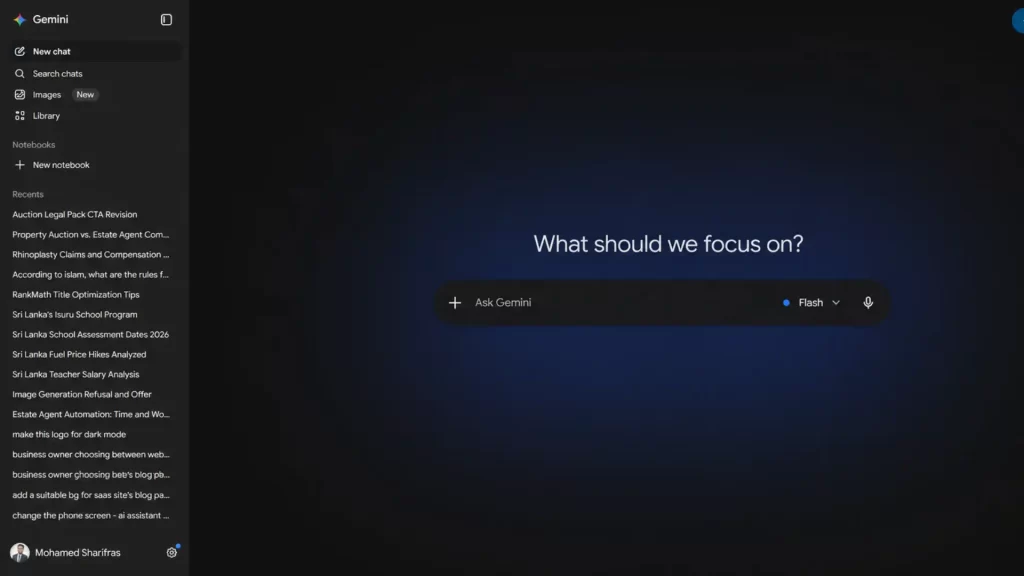
Do you need more than one?
The honest answer is: probably not, at least not to start. For most UK small businesses, the best approach is to pick one tool, use it consistently for 30 to 60 days, and measure whether it is saving time and improving quality. Spreading across three platforms too early leads to fragmented workflows and no real mastery of any of them.
That said, if your budget allows and your usage is heavy, a two-tool approach makes practical sense for some businesses. The most common pairing is ChatGPT as a primary general-purpose tool combined with Claude for writing-heavy or document-heavy tasks. The cost of both at paid tier is around £40 per month — modest against the time they can save.
What matters more than which tools you use is how you use them. A well-structured prompt that gives the AI clear context, a defined role, and specific instructions will consistently outperform a vague question regardless of which platform you are on. Building a prompt library for your most repeated tasks — enquiry responses, blog outlines, meeting summaries — is a practical step that makes any of the three tools significantly more useful. This is where dedicated AI automations and workflow systems can multiply the value of whichever tool you choose.
What none of them can do on their own
It is worth being clear about what these tools are and are not. ChatGPT, Claude, and Gemini are conversational AI assistants. They are excellent at producing, refining, and analysing text. They are not, by themselves, automation systems.
If you want AI to run a process in your business — qualify a lead from your website, fire a WhatsApp follow-up when a form is submitted, update your CRM when a job is completed — that requires your AI tools to be connected to your systems. A chatbot on your website powered by an AI model, a WhatsApp integration with automated replies, or a CRM with workflow automation built into it — these are distinct from simply having a ChatGPT subscription and asking it questions.
The gap between using AI as a productivity tool and building AI into your business systems is significant. Understanding that distinction is the most important thing any UK small business owner can take away from this comparison. Our earlier article on how to choose a web design agency in the UK touches on related questions about digital systems and who is best placed to build them for a growing business.
For a detailed technical breakdown of how the three models compare on benchmarks and architecture, the Anthropic model comparisons page and OpenAI’s own documentation provide authoritative information directly from the companies building these tools.
Quick guide: which tool to pick for your situation
Still not sure? Use this shortcut based on your most common use case:
- You mainly want help writing content, social posts, and marketing copy, and you want one tool that does most things → Start with ChatGPT.
- You produce a lot of long-form content, work with complex documents, or need detailed analysis → Start with Claude.
- Your business runs entirely on Google Workspace and you need current information from the web → Start with Gemini.
You want AI to actually run parts of your business rather than just assist with writing → You need connected automation, not just a chat tool. Talk to us.
Ready to put AI to work in your business?
Choosing the right AI chat tool is a useful first step. But the businesses seeing the biggest gains from AI are those that have moved beyond prompting and built AI into their operations — automating routine tasks, connecting customer-facing touchpoints, and freeing up their team for the work that actually requires a human.
At Webphoria, we help UK businesses build connected digital systems — from AI-powered automations and chatbots to CRM integrations and WhatsApp workflows. If you are ready to move from experimenting with AI to actually deploying it, we can help you do that practically and cost-effectively.