
Your customers want to message you — is your website making that easy?
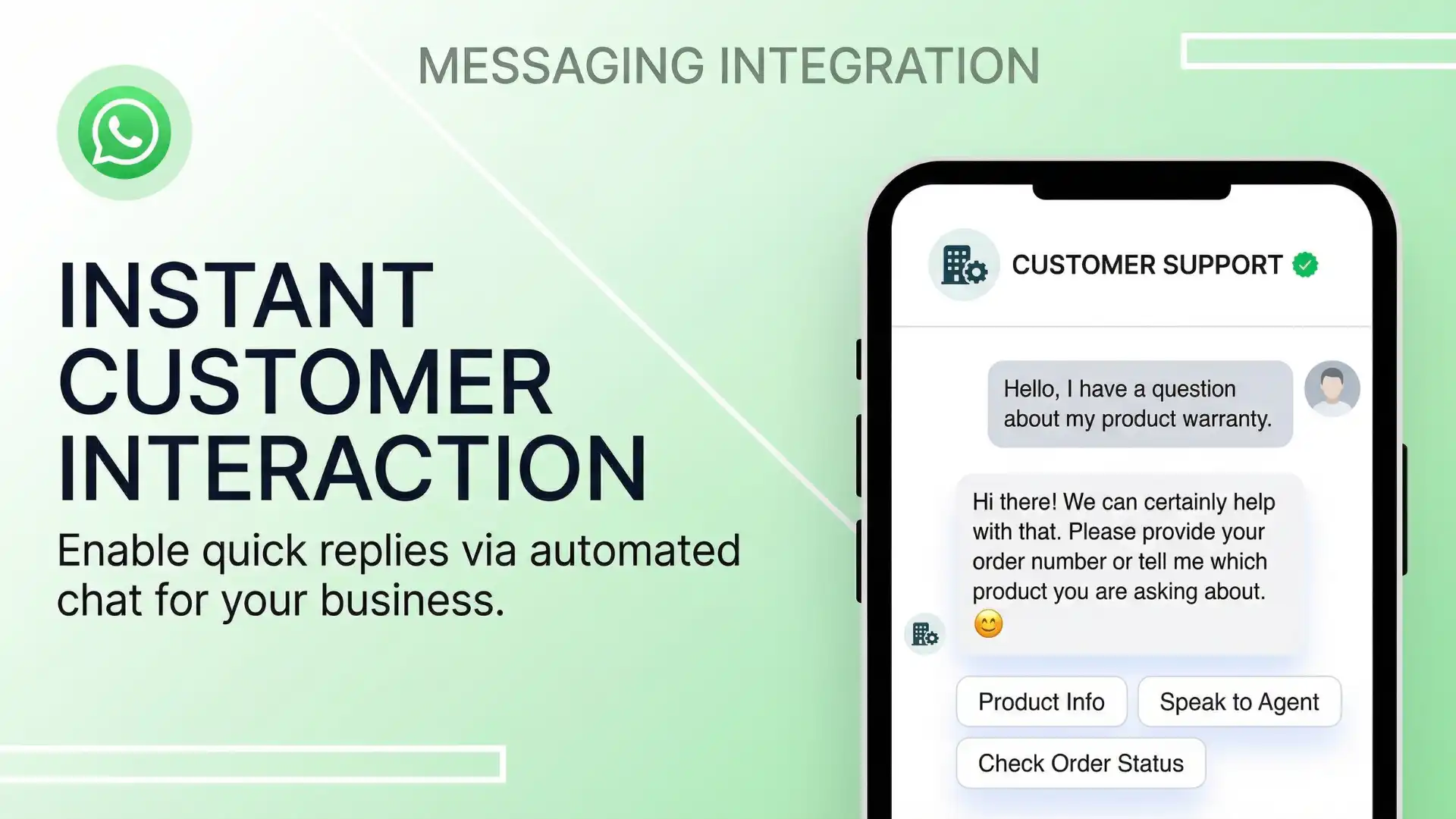
Your customers want to message you — is your website making that easy?
New global research reveals that nearly three quarters of consumers now prefer messaging over every other form of business communication. If your website isn’t built around that expectation, you’re already losing customers to businesses that are.
Think about the last time you tried to contact a business online. You probably hunted for a phone number, sat on hold, submitted a form and waited, or fired off an email into the void. Now think about how that felt compared to simply sending a message and getting a reply within seconds.
Your customers are thinking about it too — and they’re making purchasing decisions based on it.
A major new global study of over 11,000 consumers across 22 countries has confirmed what many forward-thinking businesses already suspected: messaging integration for business isn’t a nice-to-have feature on your website. It’s quickly becoming the single most important communication channel you can offer. And right now, most business websites aren’t built to take advantage of it. That’s exactly the gap we help our clients close.
The numbers your competitors haven’t seen yet
73.3% of online adults say messaging is their preferred way to communicate with a business. Not email. Not a phone call. Not a contact form. Messaging.
At the same time, 69% of consumers say waiting on hold is a waste of their time, and 71% would actively rather message a business than call it. Legacy contact methods aren’t just becoming outdated — they’re actively driving customers away. Every time someone hits your contact page, squints at a phone number, and decides it’s not worth the hassle, that’s a lost opportunity.
The research calls this the “frustration tax”: the invisible cost your business pays every single day that your communication experience doesn’t meet modern expectations. The good news? This is entirely fixable — and the businesses that fix it first gain a significant and measurable advantage. Proper messaging integration for business is what closes that gap.
Messaging isn’t just customer service — it’s a sales channel
This is the insight that tends to surprise our clients most. Messaging has moved well beyond support queries and complaint handling. It is now one of the most powerful drivers of purchasing decisions available to any business.
72.4% of consumers say they are more likely to purchase from a brand that offers messaging. Not slightly more likely. Significantly more likely. For every ten potential customers landing on your website right now, more than seven of them are primed to buy from you if you make it easy to message you — and primed to buy from a competitor if you don’t. This is the core commercial case for messaging integration for business.
The research also introduces the concept of conversational commerce: completing an entire transaction, from initial enquiry through to purchase, within a single messaging thread. 64% of adults already prefer buying via messaging over visiting a physical store. For businesses in retail, hospitality, professional services, or anywhere that takes bookings or orders, this represents a profound shift in where and how sales happen.
And when consumers were asked which messaging-based activities they’d genuinely enjoyed in the past month, the satisfaction scores were remarkable:
- Making a reservation: 91.3%
- Booking an appointment: 90.1%
- Shopping and buying something: 87.5%
- Paying a bill: 86.6%
These aren’t reluctant digital interactions — people are actively enjoying transacting this way.
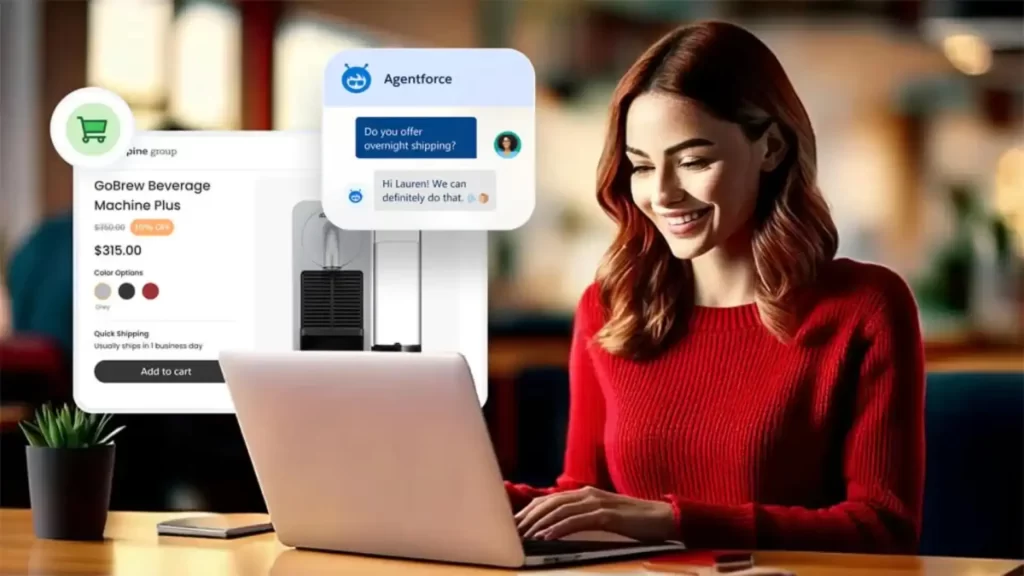
A messaging integration pays for itself
We understand that any website investment needs to make commercial sense. The data here makes a compelling case.
Consider what happens when messaging is integrated well. Customers get faster answers to pre-purchase questions, which removes hesitation and increases conversion. Post-purchase support happens in the same thread, which builds loyalty and drives repeat business. Routine enquiries get handled automatically, which frees up your team’s time for higher-value work.
One Argentinian retailer featured in the research saw 1.9x more revenue per recipient compared to email marketing, a 1.7x higher open rate, and a 5x higher click-through rate after moving to a messaging-first approach. An Indonesian bank that deployed an automated WhatsApp business messaging assistant saw a 33% reduction in annual support costs and an 18-point increase in customer satisfaction scores. These aren’t outliers. They’re what happens when the communication experience matches what customers actually want. You can explore how this type of integrated digital communication sits within a broader digital services strategy for businesses of all sizes.
Trust is built in the conversation
One of the more striking findings from the research concerns trust. 74.6% of consumers say they trust a business more when they can exchange messages with it directly. Nearly 80% are more likely to message a business when they’re confident it’s legitimate. Messaging integration for business is therefore not just a convenience — it is a trust-building tool.
Meanwhile, traditional channels are increasingly seen as unsafe. Email and SMS are well-known targets for phishing and fraud, and consumers are aware of this. Verified business profiles — the trusted badges that appear on platforms like
WhatsApp Business — have become visible proof of legitimacy. End-to-end encryption has become an expectation, not a feature.
What this means practically: a polished, professional website that sends customers to a generic email address or an unmanned phone line sends a subtly negative signal. A website that connects customers directly into a secure, verified WhatsApp business messaging channel sends the opposite one. This is something we think carefully about when we integrate messaging into the websites we build.
The personalisation problem — and how messaging solves it
Almost 70% of consumers feel frustrated when they receive irrelevant messages from a business. But three out of four say they genuinely value personalised messages about products, services, and offers that are relevant to them.
The gap between those two statistics is where most businesses are currently failing. Mass email blasts and generic SMS campaigns feel like noise. Conversational messaging, by contrast, builds context over time. Each exchange adds to a history that makes the next interaction feel more personal, more relevant, and more valuable.
75.1% of consumers say they want to communicate with businesses the same way they do with friends and family — conversationally, with memory of what’s been discussed before. Building that experience into your customer communications doesn’t just improve satisfaction. It directly drives retention. A well-designed messaging integration for business, connected to your CRM and built into your website from the ground up, is what makes that kind of conversational commerce possible at scale.
What about AI? Your customers are ready for it
There’s a common hesitation among business owners about deploying automated or AI-powered responses. The worry is that customers will find it impersonal or off-putting. The data suggests those concerns are largely unfounded.
69% of consumers say quick responses from a 24/7 AI chatbot would improve their experience. 67.7% find AI chatbot responses genuinely helpful. The critical insight, though, is this: customer frustration isn’t caused by automation — it’s caused by waiting. A fast, accurate automated response beats a slow human response every time. This is the foundation of effective conversational commerce at scale.
The most effective model combines both: AI handles routine, high-volume enquiries instantly and around the clock, while your team focuses on the complex, relationship-building conversations where human judgement matters. Designing that handoff to feel seamless is part of what we build into every messaging integration for business we deliver. The result is a business that appears to be always available, always responsive, and always professional — regardless of the time of day or the size of your team.
What a proper messaging integration looks like
There’s a significant difference between dropping a WhatsApp button somewhere on your contact page and genuinely integrating messaging into the architecture of your website and customer journey. A surface-level WhatsApp business messaging button is an afterthought. A properly designed messaging integration for business is infrastructure.
A proper integration means messaging entry points appear at the right moment — when a visitor is considering a purchase, reading a product page, or about to abandon a form. It means the conversation thread carries context from the website through to your team. It means automated responses handle the basics while human agents are notified when something needs their attention. It means post-purchase communications, order updates, appointment reminders, and re-engagement campaigns all flow through the same trusted channel.
42% of consumers say they want to handle all interactions with a business in one place. Nearly the same proportion value being able to scroll back through a complete conversation history. Building that unified experience requires thinking about messaging not as a standalone widget, but as a core part of how your digital presence is designed. That means the design of your website and the architecture of your messaging channels need to be built together from the outset — not bolted together after the fact. That’s the approach we take, and it’s what makes the difference between a conversational commerce setup that converts and one that sits unused.
Is your website ready?
The businesses gaining ground right now are the ones that have recognised WhatsApp business messaging — and messaging more broadly — as infrastructure, not an add-on. They’re building websites and customer journeys around the communication channel that the majority of their customers actually prefer.
If your current website was built before this shift took hold — or if messaging was bolted on as an afterthought — it’s worth having a conversation about what a properly integrated approach could look like for your business. The gap between a messaging integration for business done well and one done poorly is the gap between a conversational commerce experience that drives revenue and one that creates friction.
We offer a free consultation to assess your current setup, identify where the friction points are, and outline what a modern, messaging-first website could deliver for you in terms of enquiries, conversions, and customer retention. Get in touch with our team today, and let’s talk about what your website could be doing for your business that it currently isn’t.
Your customers want to message you — is your website making that easy?
If customers can’t quickly message your business, they’ll leave and go to a competitor who makes it easier. Modern users expect instant communication — whether it’s WhatsApp, live chat, or simple contact forms. If your website isn’t built for that, you’re losing leads without even realising it.
We help businesses optimise their websites for real conversations — integrating messaging, improving response flow, and removing friction so more visitors turn into enquiries.