
How to get more Google reviews for your business

How to get more Google reviews for your business
If you want to get more Google reviews, the opportunity is almost always larger than businesses realise — because most of it is sitting untapped in their existing client list. You do not need to spend more on advertising, reach new audiences, or win new customers before your review count starts growing. The clients you already have, and the ones you worked with in the past, are your most valuable and most overlooked source of genuine five-star feedback.
This guide is built around that reality. It covers how to approach Google review requests with your current clients, how to re-engage past customers who never left a review, how to set up automated review collection so the process runs without you having to remember, and — critically — where the line sits on incentives such as discount offers. Each approach is practical, policy-compliant, and designed to generate a consistent flow of authentic feedback that builds your profile over time.
Start with your current clients: the warmest source of reviews
Your current clients are the easiest place to start if you want to get more Google reviews. They know your business, they have recent experience of your service, and if the relationship is in good shape, most of them will be happy to leave feedback when asked directly and at the right moment.
Ask at the peak of satisfaction
Timing is everything when it comes to Google review requests. The best moment to ask is immediately after a positive outcome — a project completion, a successful delivery, a compliment, or a check-in call where the client expresses genuine satisfaction. At that point, their experience is fresh, their goodwill is high, and saying yes takes minimal effort.
A simple, direct ask works best. You do not need a long explanation or a formal process — something as brief as “It would mean a lot to us if you had a moment to share your experience on Google” is enough when the relationship is warm. Include the direct review link so they do not have to search for where to go.
Add the review link to every touchpoint
For ongoing clients, the review link should appear in places they already see regularly. Add it to your email signature, your invoices, your project completion emails, and your client-facing documents. You are not asking aggressively — you are making it visible and easy for those who are already inclined to say something positive.
Your website is also part of this picture. A well-designed site that showcases your work builds confidence and makes clients more likely to leave a positive review after a project ends. The work in our client portfolio gives a sense of how a strong digital presence reinforces client trust — and clients who trust your brand are far more likely to invest the two minutes it takes to leave feedback on Google.
Re-engage old clients: an untapped source of Google reviews
Past clients are one of the most underused assets in any review strategy. Many businesses focus entirely on new customers when thinking about Google review requests, overlooking a database of people who already know the quality of their work and are often genuinely glad to hear from them.
A re-engagement message to a past client does not need to feel awkward or transactional. Start with a genuine check-in — acknowledge how much time has passed, express that you valued the relationship, and briefly mention what you have been working on since. Once the tone is warm and human, a simple, honest request for a review sits naturally within that message.
What a re-engagement review request looks like in practice
The message does not need to be long. Something along these lines works well: acknowledge the project you worked on together, mention that you are actively building your presence on Google, and let them know their perspective would genuinely help. Include the direct link. Do not pad it with marketing language or make it feel like a bulk email — even if you are sending to a list, write as though you are writing to one person.
Businesses that go back twelve to twenty-four months into their client history and send a short, personalised re-engagement sequence often find that a significant proportion respond positively — both with reviews and with renewed interest in working together again. Getting more Google reviews from past clients is frequently the fastest way to grow a review count that has stalled, because the trust is already there.
Segment your list before you reach out
Not every past client is the right candidate for a review request. Focus on those where the project ended well, where there were no unresolved issues, and where the relationship was genuinely positive. A targeted message to fifty well-chosen former clients will always outperform a blanket email to five hundred. Take the time to personalise at least the opening line and the reference to their specific project.
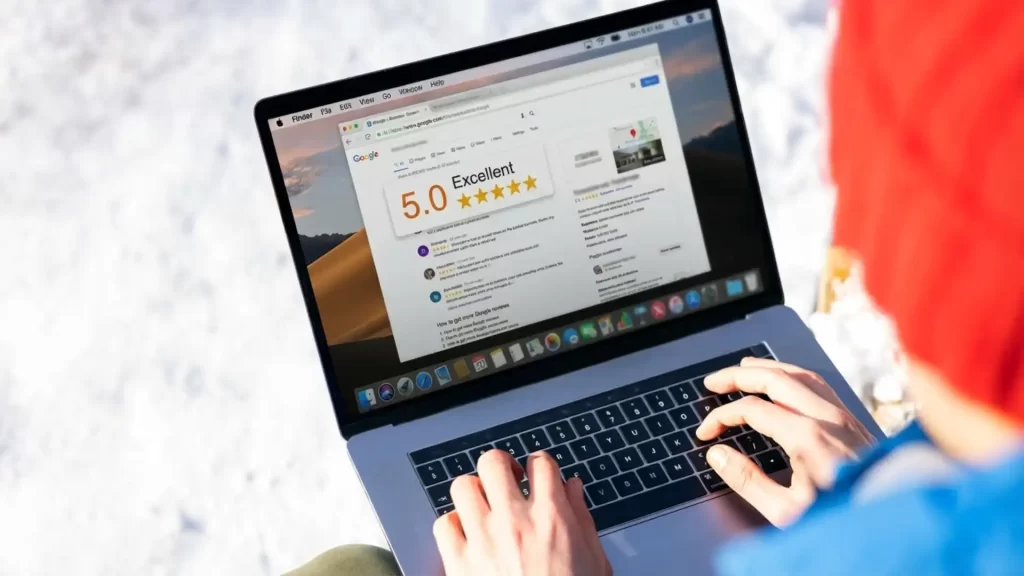
Automated review collection: getting more Google reviews without the manual effort
Manual review requests work, but they depend on memory, time, and consistency — all of which are in short supply in most businesses. Automated review collection solves this by building the request into your existing workflow, so that every completed project or transaction triggers a review ask without anyone having to remember to send it.
How to set up automated review requests
The most common approach is to use your email marketing platform or CRM to trigger a review request email at a set point after a purchase is completed or a project is marked as closed. The timing matters: a 24 to 48-hour delay after the completion event tends to perform best, because the experience is still fresh but the client has had time to reflect.
Most email platforms — including Mailchimp, ActiveCampaign, HubSpot, and many others — support automation sequences that can handle this without any manual input. Your Google review requests can be built into the same flow that sends a completion summary, a satisfaction check-in, or a final invoice. The client receives it as part of a natural sequence rather than a separate, out-of-context ask.
Key elements of an effective automated review request email:
- A subject line that references the specific project or transaction rather than a generic phrase
- A short, warm opening that acknowledges the work you completed together
- A single, clear ask — one sentence is enough
- The direct Google review link, clearly visible and easy to tap on mobile
- A brief note on why reviews matter to your business, kept to one line
Chasing reviews: the follow-up sequence
Automated review collection works even better when it includes a follow-up. Many people intend to leave a review after the first email but get distracted before they do. A single, polite follow-up sent three to five days later — referencing that you sent a message earlier and that you would still appreciate their thoughts — consistently recovers a proportion of those non-responders.
Keep the follow-up shorter than the original message. Acknowledge that you know they are busy, restate the ask in one sentence, and include the link again. Two messages is the right limit — anything beyond that tips from gentle persistence into pressure, which is not the impression you want to leave. Done well, this two-step sequence means you get more Google reviews from the same pool of clients with minimal additional effort.
Connecting your review system to your CRM
If you use a CRM to manage client relationships, automated review collection can be built directly into your pipeline stages. When a deal moves to “completed” or “delivered,” a review request sequence is triggered automatically. This is particularly powerful for businesses with longer sales cycles, multiple team members, or a high volume of projects — because it removes the dependency on any individual remembering to follow up.
Can you offer a discount or incentive to get more Google reviews?
This is one of the most common questions businesses ask, and the answer matters — because getting it wrong can result in reviews being removed or your Google Business Profile being penalised.
Google’s policy is clear: you cannot offer a reward, discount, gift, or any other incentive in exchange for a Google review. This applies regardless of whether you specify that the review must be positive — offering anything of value in exchange for leaving feedback is a policy violation. The Competition and Markets Authority in the UK has also taken action against businesses that incentivise reviews in ways that distort the authentic picture they present to consumers.
That does not mean you cannot do anything rewarding alongside Google review requests. The distinction is in the sequencing and the framing. Rewarding all customers after a project — with a loyalty discount, a thank-you card, or a small gift — is perfectly acceptable. Offering something specifically and conditionally in exchange for leaving a review is not.
In practice, the most effective review strategies do not need incentives. Clients who had a genuinely good experience leave reviews when asked clearly and at the right time. The focus should be on delivering excellent work, making the ask easy, and following up consistently — not on providing an incentive that risks your credibility with both Google and your customers.
Respond to every review, including the negative ones
Getting more Google reviews is only half the picture. How you respond to the reviews you receive shapes how your profile looks to every future customer who reads it — and research from Google indicates that businesses that consistently respond to reviews are significantly more trusted than those that do not.
For positive reviews, the response should be warm, specific, and brief. Reference something from what the reviewer said rather than using a copy-and-paste reply — it signals that a real person read it and appreciated it. For negative reviews, stay calm, acknowledge the concern without being defensive, and invite the customer to continue the conversation offline. A measured response to a negative review often does more for your reputation than the review itself damages it.
Put your reviews to work: display them where they make an impact
Once you start to get more Google reviews, the next step is making sure they are visible where they have the most influence. Google review requests generate the feedback — but it is how you use that feedback across your digital presence that determines how much value it creates.
Feature your best reviews on your website’s homepage, on your services pages, and near your contact forms. Embedding a live Google reviews widget means your rating updates automatically as new reviews come in. A dedicated testimonials page gives you a permanent home for social proof that prospective clients can find through both search and direct navigation.
The design of your website plays a significant role in how effectively social proof converts visitors into enquiries. Our web design service is built around conversion as well as aesthetics — integrating reviews, trust signals, and clear calls to action in a way that works with your specific audience and business goals.
Build a review strategy that keeps working for your business
The businesses that consistently get more Google reviews are not necessarily the ones doing the most impressive work — they are the ones with a system. Current clients contacted at the right moment, past clients re-engaged with a genuine message, and an automated review collection flow that runs in the background are the three pillars of a profile that grows month on month. Put those three things in place, respond to what comes in, and use the reviews you earn across your website and your marketing, and the compound effect becomes significant over time.
If you would like to talk through how your digital presence — your website, your online visibility, or your overall digital strategy — can support your review growth, our digital services team works with businesses across a wide range of industries to build the kind of online presence that earns trust before a conversation even starts. You are welcome to get in touch and start that conversation with us directly — no obligation, just a straightforward discussion about what would make the biggest difference for your business.
Struggling to get more Google reviews?
Most businesses already have the clients they need to grow their review profile. The key is asking at the right moment, re-engaging past customers, and setting up automated review requests so the process runs consistently without manual effort.
Our team helps businesses build simple systems for Google review requests, automated review collection, and stronger online visibility so your review count grows naturally over time.