
Don’t overpay for your next mobile app development
Don’t overpay for your next mobile app development
Mobile app development is not as expensive as it used to be. A few years ago, building for iPhone and Android often meant two separate codebases, longer timelines and a bigger team from day one. Today, better frameworks, reusable components and practical AI tools have changed that. The businesses that still overspend are usually not paying for code alone. They are paying for unclear scope, unnecessary features, slow decisions and rebuilding work that could have been avoided.
That shift is good news for founders, marketing teams and growing businesses. A sensible mobile app development plan can now get you to launch faster, test your idea earlier and improve the product with real user feedback instead of guesswork. The key is knowing where the budget should go and where it should not.
At Webphoria, we see the strongest results when an app is treated as part of a connected digital system rather than a standalone product. That is why businesses often start by looking at our broader digital services before deciding what the first version of an app really needs.
Why mobile app development is cheaper than it used to be
The biggest reason mobile app development has become more affordable is that teams no longer need to build everything from scratch. Modern frameworks speed up the build process, design systems reduce repeated work, and cloud tools make testing and deployment easier than they were a few years ago.
Frameworks such as Flutter and React Native have made shared builds far more practical for many business projects. In the right situation, one shared codebase can support both iOS and Android without doubling the work. That does not remove every technical decision, but it does reduce duplicate effort, which has a direct effect on app development cost.
AI has also started to remove low-value production time. Good teams now use AI to speed up wireframing, generate first-pass documentation, support QA, review code patterns and spot edge cases sooner. Used properly, AI does not replace strategy, product thinking or user research. It reduces admin-heavy work so the team can focus on the parts of the app that actually create value.
The result is simple. Mobile app development can be faster, leaner and more predictable than many businesses expect. Lower cost does not have to mean lower quality. It usually means less waste.
Start with the smallest useful version
One of the fastest ways to lose control of app development cost is to treat version one like version five. Many businesses approach an app with a long wish list, then wonder why the estimate grows before development even begins.
A better move is to define the smallest useful version of the product. That means keeping the features that solve the main problem and delaying the rest until there is proof that users actually need them. This is still professional mobile app development. It is simply a smarter way to build.
What belongs in version one
Version one should include the parts of the app that support the main user journey. That could be account access, bookings, forms, notifications, task updates or simple payments. It does not need every future idea built in on day one.
The goal is to launch with clarity. Once real users start using the product, you can see what they value, where they get stuck and what deserves the next round of investment. That keeps app development cost tied to evidence instead of assumptions.
For businesses comparing options, our mobile app development approach is built around discovery, practical design and scalable delivery rather than feature overload from the start.
Why cross-platform app development matters to your budget
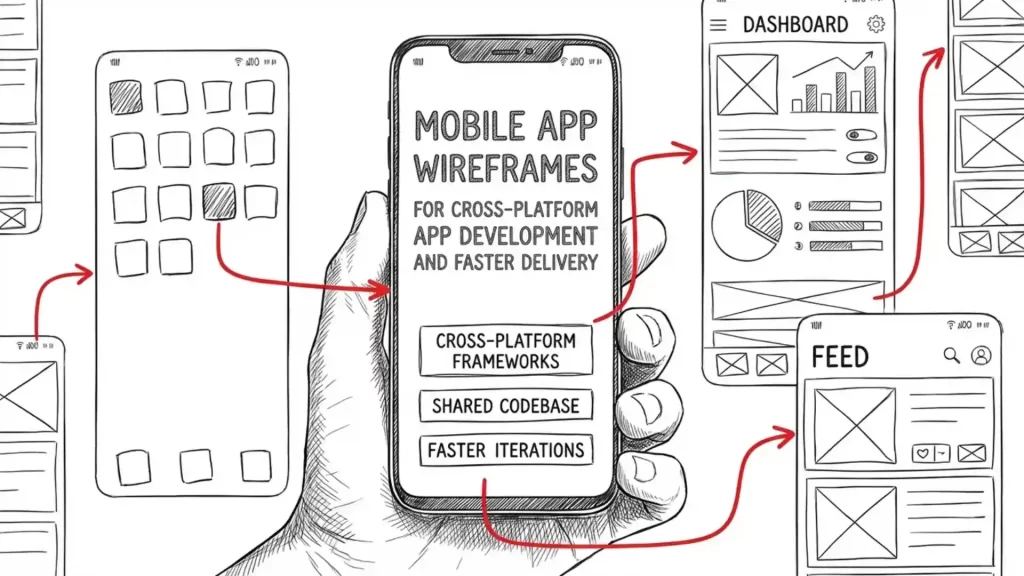
Cross-platform app development is often the clearest route to a lower first-phase budget. Instead of creating two separate native apps from scratch, the team can build one product that works across both major platforms with a more efficient process.
That matters because duplicated work is expensive. Two builds can mean two testing cycles, two update paths and more hours spent keeping feature parity. Cross-platform app development reduces that pressure and helps businesses launch sooner.
When cross-platform app development makes the most sense
Cross-platform app development works especially well for business tools, service apps, booking systems, customer portals and workflow apps. These products usually need reliability, strong user experience and smooth integrations more than highly specialised device-level features.
It is not the right answer for every single product. Some apps still need native development because of performance demands or advanced hardware access. But many projects do not. For a large number of business cases, cross-platform app development gives you the best balance of speed, consistency and value.
Cross-platform app development also fits the way businesses now grow digital products. You can launch, learn, improve and extend without committing to the cost of two separate teams too early.
Let AI cut waste, not corners
The conversation around AI can become exaggerated very quickly. No serious business should choose a team because it promises a “fully AI-built app” at a suspiciously low price. That is usually a sign that quality, testing or long-term maintainability will suffer.
The more useful question is this: where can AI remove waste from the process?
In strong mobile app development workflows, AI helps with repetitive tasks that used to consume hours. It can support early idea mapping, speed up content structuring, help document user flows, generate test cases, assist with bug triage and reduce time spent on routine coding patterns. That kind of support lowers friction inside the project and protects app development cost from avoidable delays.
What AI should not do is replace product decisions. A good app still depends on human judgement, commercial thinking and proper design. AI is most valuable when it supports the team behind the product rather than pretending to be the product team.
The hidden costs that quietly increase app development cost
Most overpayment does not come from one big mistake. It comes from a series of smaller decisions that look harmless at the time.
Here are the common ones:
- changing the scope after development has started
- building features nobody has validated
- paying for separate systems that do not integrate properly
- underestimating testing, support and post-launch updates
These issues drive up app development cost because they create rework. Rework is where budgets quietly disappear.
Scope drift is more expensive than most people realise
When requirements are vague, the team has to make assumptions. Later, those assumptions get revised and the product gets reshaped. Every change affects design, development, testing and timelines.
A clear brief does not need to be complicated. It just needs to define the purpose of the app, the main user types, the core actions, the key integrations and the result the business wants. That alone can save a surprising amount of money in mobile app development.
Post-launch costs still matter
Even when the build is efficient, you still need room in the budget for updates, fixes and improvements. That does not mean the app will become expensive forever. It means you should plan for a steady, sensible level of support instead of pretending the spend ends at launch.
Businesses that think long term usually make better decisions during mobile app development because they avoid short-term shortcuts that create expensive problems later.
Choose a partner who pushes back when needed
A weak agency says yes to everything. A strong one helps you trim the brief, challenge assumptions and protect the budget.
That matters because not every request is equally valuable. Sometimes the most useful thing a development partner can say is, “You do not need that yet.” Honest guidance is often the difference between a sensible investment and an inflated project.
This is also where proof matters. Looking through recent portfolio work can tell you whether a team builds practical digital products or just sells polished promises.
Why local communication can still save you money
Frameworks and AI have made delivery more efficient, but communication still shapes cost. Delays in feedback, unclear approvals and slow decision-making can undo a lot of the savings created by better tools.
That is one reason many companies still prefer a local partner that understands how the business operates, how decisions get made and how to keep communication straightforward. The same thinking behind why local businesses choose Webphoria in 2026 also applies to app projects: clarity, speed and alignment save money.
When the right people are involved early, mobile app development becomes easier to scope, easier to manage and far less likely to drift.
A smarter checklist before you sign off your project
Before agreeing to a proposal, ask these questions:
- What is the smallest version we can launch without weakening the core idea?
- Can this be delivered through cross-platform app development instead of two separate builds?
- Which parts of the process will use AI to save time without cutting quality?
- What integrations, testing and post-launch support are included in the quote?
- What would make the budget grow later, and how will that be controlled?
Those questions help you protect app development cost before money is committed. They also tell you a lot about how the team thinks.

Build lean now and expand with confidence later
The old view of mobile app development was simple: apps are expensive, slow and risky. That is no longer true in the same way. With the right scope, the right framework and sensible use of AI, businesses can launch useful apps without carrying unnecessary weight from the beginning.
The smartest projects are not the ones with the biggest first budget. They are the ones that solve a real problem, launch with purpose and grow based on evidence. That is how you protect app development cost and still end up with a stronger product.
For businesses ready to explore what that could look like, a quick conversation through our project enquiry page is often enough to turn a broad idea into a clearer, more cost-effective plan.
Planning a mobile app without overspending?
A successful app does not need an inflated budget from day one. We help businesses plan mobile app development with the right scope, practical cross-platform thinking, and smarter delivery choices so you can launch sooner and avoid unnecessary cost.