
Can ChatGPT build a website?
Can ChatGPT Build a Website? What It Can and Can’t Do
Can ChatGPT build a website? Yes — more than it could a year ago. ChatGPT can still generate HTML, CSS, JavaScript, copy and site structure, but OpenAI now also offers ChatGPT Sites, which can create, preview, host, publish and refine websites or lightweight apps where the feature is available. That changes the answer from “it can write the code” to “it can build and deploy some kinds of site” — with important limits for business use.
This guide covers what ChatGPT can genuinely do for a website now, where ChatGPT Sites and coding tools still have limits, how UK availability affects the answer, and when a professional build remains the safer route.
What ChatGPT can actually do for a website now
Used well, ChatGPT can cover much more of the early build process than simple drafting. It can plan a site, generate code and copy, iterate on a preview, and — through ChatGPT Sites where available — deploy a hosted website or lightweight app from the same workflow. You still need to review what it produces and decide whether the result is appropriate for the business.
- Generating and editing website code: Given a clear brief, ChatGPT can produce and revise HTML, CSS, JavaScript and modern web-app code, especially when the work is broken into reviewable steps rather than one giant prompt.
- Structuring a site: It can propose a sitemap, page hierarchy, navigation and content plan, then refine them as requirements change.
- Design direction: It can help turn a visual brief into layouts, components, typography and styling, but the result still needs human review for brand fit, accessibility and consistency.
- Content drafting: Homepage copy, service descriptions, FAQs and metadata are useful starting points, provided they are fact-checked and edited into the business’s own voice.
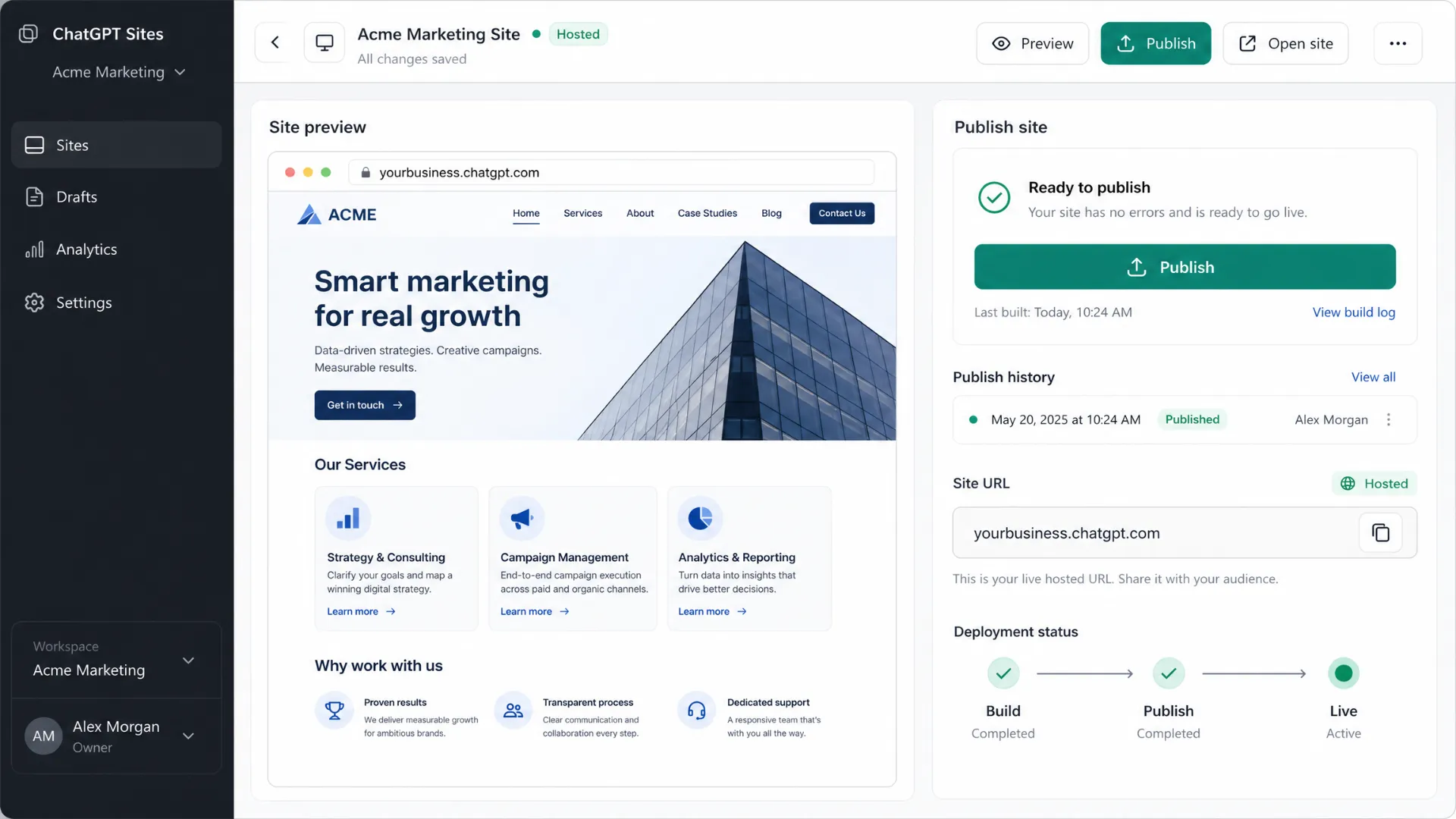
- Creating and hosting a site where available: ChatGPT Sites can generate a private preview, accept revisions and publish to a hosted Site URL. Custom domains, availability, usage limits and supported integrations still depend on the account, region and Sites runtime.
Can ChatGPT build a website for a real business?
Yes, sometimes — but “can build” and “is the right production setup” are different questions. ChatGPT Sites is designed for hosted web experiences, and OpenAI says supported capabilities depend on the Sites runtime and account. Complex integrations, sensitive data, payments, custom infrastructure and long-term ownership still need deliberate technical decisions.
It still needs clear direction, testing and review
A strong result still depends on a clear brief, staged review and testing. Large multi-page projects can drift in structure or design if requirements are vague, and generated code or content can contain mistakes. Treat the first version as a build to inspect, not a finished specification to trust blindly.
Hosting and publishing now exist — but availability matters
OpenAI’s ChatGPT Sites now includes hosting and publishing to a Site URL, and custom domains are supported where available if you already own the domain and can update DNS. However, Sites is still in public beta. At the time of writing in August 2026, OpenAI’s Help Center says Sites is not available in the United Kingdom at launch, so UK users should check current availability before planning a production site around it.
Complex integrations still need deliberate setup
ChatGPT can iterate on a site, but integrations with a CRM, booking system, private network, unusual database or existing business platform are not automatically solved by generating a page. OpenAI notes that some frameworks, databases, background services and hosting patterns may not be supported in Sites, so integration requirements should be checked before committing to the platform.
Payments, forms and backend features are possible — but not automatic
ChatGPT Sites can support interactive behaviour, storage and lightweight app features, and OpenAI allows third-party payment processors. But connecting, configuring and maintaining payments or external services remains your responsibility, and Sites must not directly process sensitive payment-card data.
Maintenance is still your responsibility
ChatGPT Sites can be edited and redeployed after launch, so the site is not frozen at the first version. You still remain responsible for the site’s content, functionality, privacy, integrations, support and ongoing checks — including accessibility, broken links, performance and any business-critical workflows.
ChatGPT vs a dedicated AI website builder vs an agency
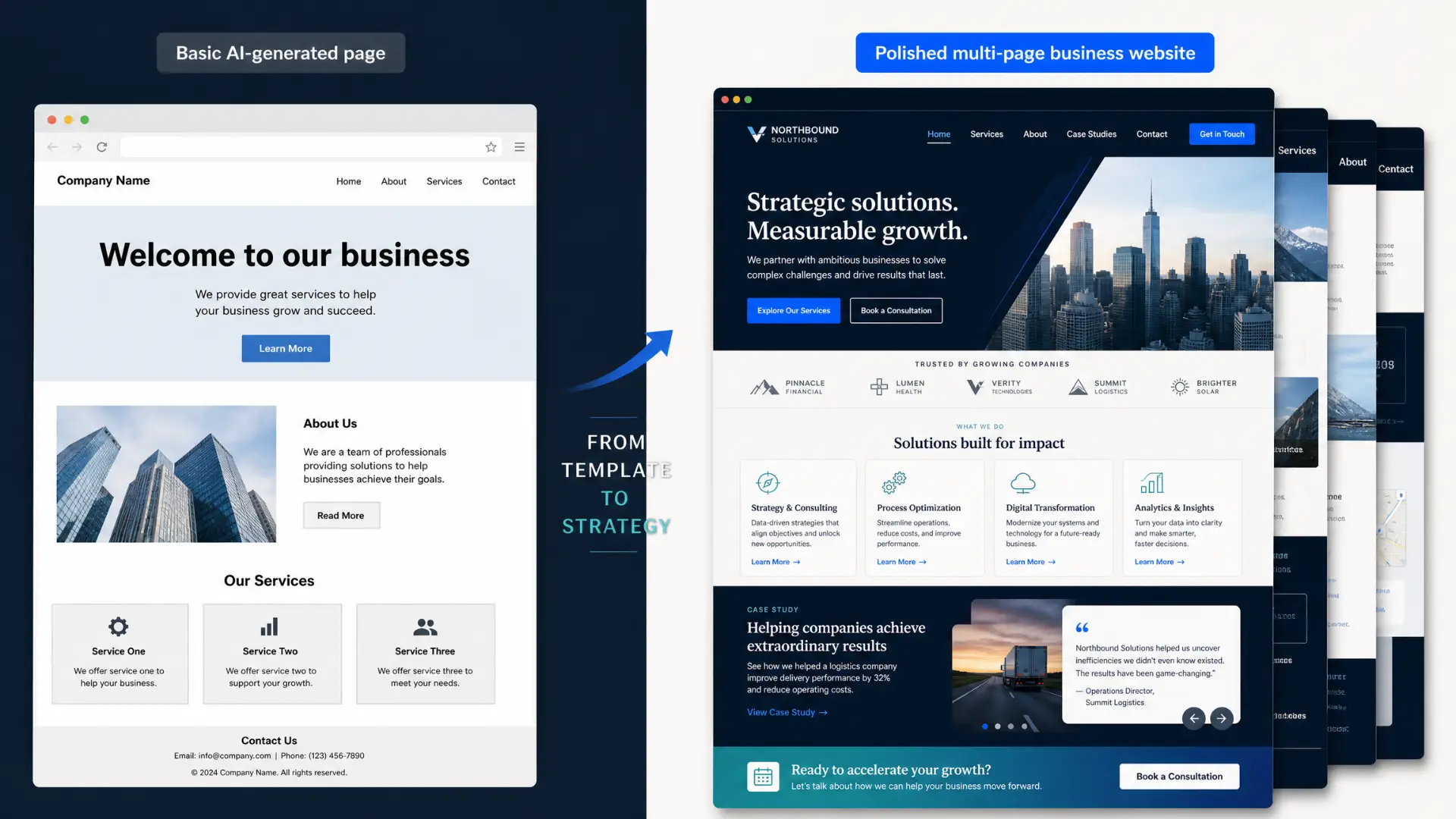
ChatGPT is no longer just a code-and-copy assistant in this comparison, because Sites adds a hosted website-builder layer where available. The more useful comparison is how much control, integration depth and ongoing responsibility each route gives you.
- ChatGPT / ChatGPT Sites: strong for prototypes, lightweight sites and apps, internal tools and straightforward public sites where Sites is available; still subject to runtime, plan and regional limits.
- Dedicated AI website builders: purpose-built for website generation and publishing, often with more mature templates or CMS-style controls, but still require review and may constrain custom functionality.
- A professionally built website: best when the site is a core sales channel, needs bespoke integrations, must meet strict compliance or accessibility requirements, or needs a clear long-term ownership and support plan.
When ChatGPT is actually a reasonable choice
- A genuinely simple, single-page site — a personal link page, a small portfolio, a placeholder page while a proper site is being planned.
- Drafting website copy that a designer or developer will then implement properly.
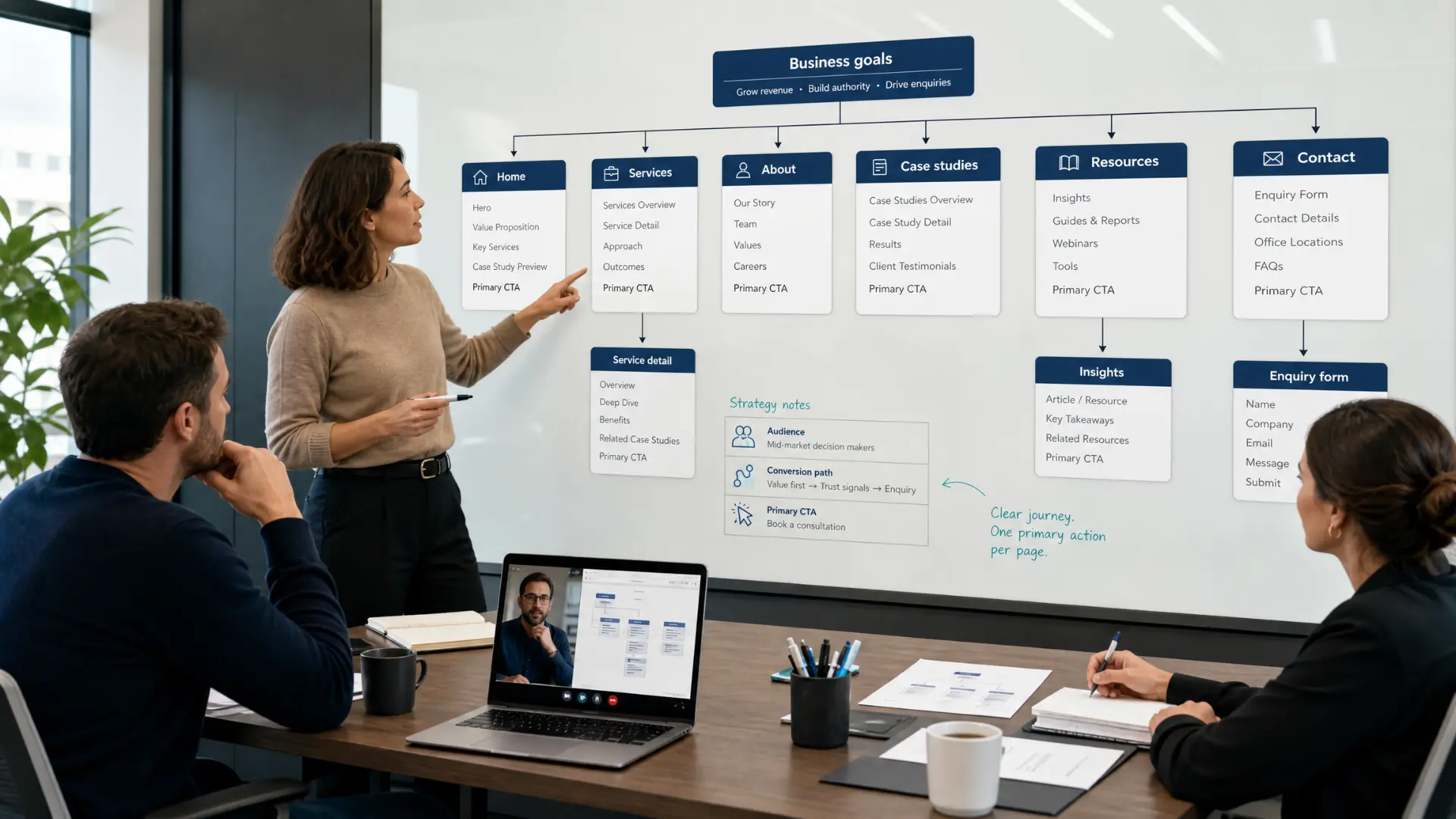
- Sketching out a rough site structure or sitemap before a strategy call, so you arrive with a clearer idea of what you want.
- Learning, experimenting or prototyping an idea with no real deadline or business consequence attached to it.
When a developer-led build is usually safer
- A site where lead generation, sales or enquiries are business-critical and conversion design, analytics and integrations need to be tested against real goals.
- E-commerce, bookings or customer-data workflows where payment, privacy, security and support obligations need a clearly owned technical setup.
- A site with complex CRM, automation, WhatsApp, booking or legacy-system integrations that need dependable two-way data flows.
- A regulated or high-trust business — such as healthcare, finance or professional services — where accuracy, accessibility, privacy and credibility need formal review.
- A site you expect to evolve for years and hand between staff, agencies or developers, where documentation, maintainability and portability matter.
The practical way to use it
The practical approach is to use ChatGPT at the level your project can safely support. If ChatGPT Sites is available and the requirement is lightweight, build a prototype and test it. If you are in the UK or need a more complex production setup, use ChatGPT to clarify the sitemap, content and functionality, then take that brief into a web design conversation. That preserves the speed of AI without treating a generated first version as the whole delivery process.
Frequently asked questions
Can ChatGPT make my website live on the internet?
Yes, where ChatGPT Sites is available. OpenAI says Sites can create a hosted production URL and can support custom domains where available. However, availability is plan- and region-dependent; OpenAI’s August 2026 Help Center says Sites is not available in the UK at launch, so UK readers should verify the current rollout before relying on it.
Is it cheaper to use ChatGPT than hire a web design agency?
It can reduce the cost and time of prototyping, and for some lightweight sites it may be enough on its own where Sites is available. For a business-critical site, compare total cost rather than build cost alone: design quality, integrations, accessibility, testing, maintenance and support can outweigh the apparent saving from a DIY first version.
Want a website that actually does the work for your business?
If you’ve used ChatGPT to sketch out what you want, we can take it from there — or start from scratch with a proper strategy conversation about what your site actually needs to do.