
What is Lovable? The AI website builder everyone’s talking about
What is Lovable? The AI website builder everyone’s talking about
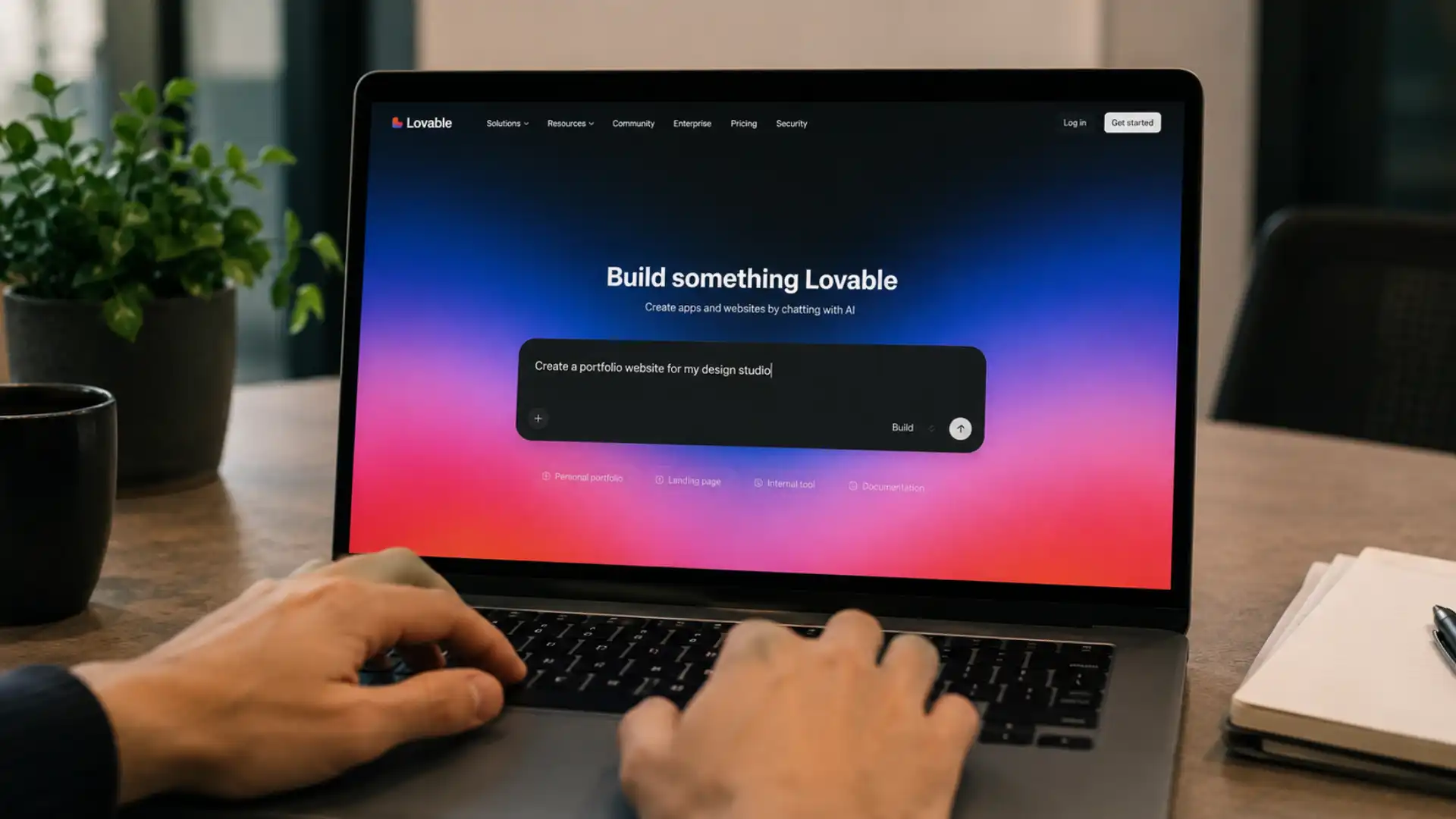
The Lovable AI website builder has been generating genuine buzz in the web design world. The premise is simple: you type a description of what you want, and within minutes the tool generates a working website complete with code, layout, and design. No developer needed. No lengthy build process. Just a prompt.
It sounds remarkable — and in some respects it is. But for UK small businesses trying to decide whether Lovable is the right choice for their website, the more important question is not whether it works, but whether it works for you. This guide takes an honest look at what Lovable actually does, where it falls short, and how to decide what your business genuinely needs from a website.
What is Lovable?
Lovable is an AI-powered platform that generates code and web interfaces from a short text description, known as a prompt. You describe what you want — the type of business, the pages you need, the features you have in mind — and Lovable builds a functional prototype in minutes.
The platform combines an intuitive chat-style interface with an AI model trained on code generation. It can produce layouts, interactive elements, and basic application logic, and it allows you to refine the output by continuing to add prompts. Once you are happy with the result, you can publish the site directly from the platform.
Lovable sits within a broader category of no-code website builders and AI web design tools that have emerged rapidly over the last two years. What distinguishes it from older drag-and-drop builders is that instead of picking from templates and adjusting elements manually, you describe what you want in plain language and the AI generates the underlying code for you.
What can Lovable actually do?
For straightforward use cases, Lovable is genuinely capable. It excels at:
- Generating working HTML, CSS, and JavaScript from a description
- Creating simple, clean interfaces quickly — useful for prototypes and landing pages
- Fixing surface-level layout issues and making visual refinements through follow-up prompts
- Producing a functional starting point for a project in a fraction of the time it would take to build from scratch
- Connecting to backend services via integrations for databases and API functionality
Real-world testing confirms this. Developers who have used Lovable for personal projects report that a basic system — member management, booking calendar, admin controls — can be set up in a matter of hours across a few dozen prompts. For simple internal tools or proof-of-concept builds, the speed is impressive.
This is part of why AI web design tools for small businesses are attracting so much attention. The promise of going from idea to live website in an afternoon, without a budget for a developer, is genuinely compelling — especially for sole traders and early-stage businesses testing an idea.
Where Lovable falls short
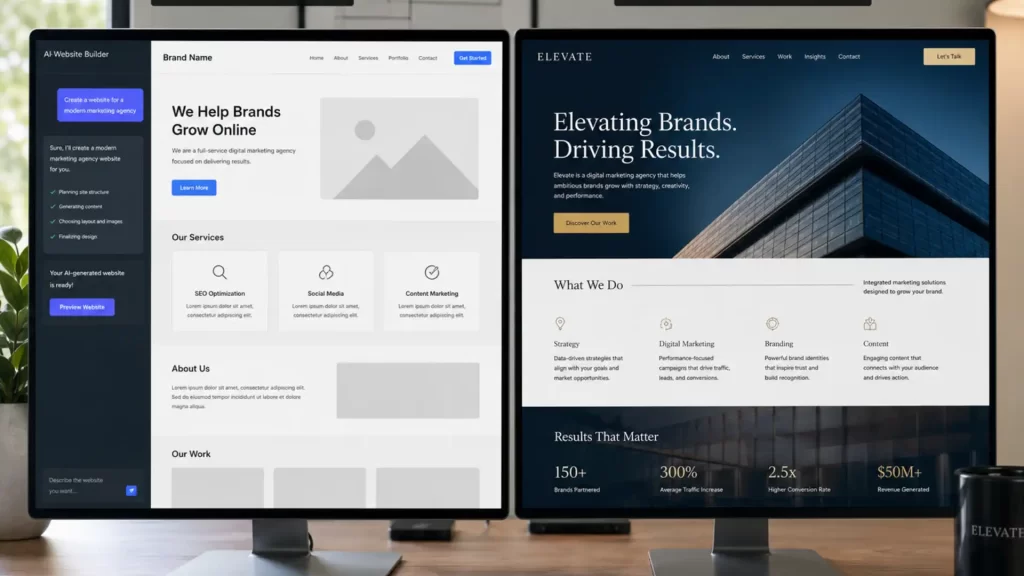
The honest picture is more nuanced. The same developers who praise Lovable’s speed consistently identify the same ceiling: it handles surface-level tasks well, but struggles with anything requiring depth.
Backend complexity
The most frequently reported limitation is backend logic. Lovable can generate front-end interfaces quickly, but the database connections, server-side logic, and custom functionality that power a real business website often require manual intervention. Users without development experience will hit this wall and have no way over it.
Quality degrades with complexity
Initial outputs are often clean and readable. But as you build on them through multiple prompts — especially when trying to fix bugs — the AI can introduce new issues while resolving old ones. After 20 to 30 prompts, projects often reach a point where the output is difficult to iterate further without direct code editing.
No strategic thinking
A Lovable AI website builder generates what you describe. It cannot advise on what your website should do for your business, what your competitors’ sites do better, what conversion signals are missing, or how your brand should communicate to your target audience. The strategic layer — the thinking that makes a website perform rather than just exist — is entirely absent.
No brand, SEO, or performance layer
Lovable produces code and interfaces. It does not produce a thought-through brand identity that makes your business recognisable and trustworthy. It does not optimise your site structure, page speed, or content for search engines. It does not think about conversion rate — whether a visitor who lands on your site is likely to enquire, buy, or leave. These are separate disciplines, and they are what typically separates a business website that generates results from one that simply exists online.
Lovable vs professional web design: a comparison
| Lovable AI website builder | Professional web design agency |
|---|---|
| Fast to launch (hours, not weeks) | Takes longer but built to last |
| Low upfront cost | Higher investment, greater long-term return |
| Good for prototypes and idea validation | Built around your business objectives |
| Works well for very simple sites | Handles complex, scalable requirements |
| Limited backend and custom functionality | Full custom functionality available |
| No brand or SEO strategy | Includes brand thinking, SEO and conversion strategy |
| Output quality degrades with complexity | Consistent quality throughout |
| You manage everything yourself | Ongoing support and expertise on hand |
Who is Lovable actually right for?
Lovable is a legitimate tool in certain contexts. It is most likely to serve you well if:
- You are an early-stage business or sole trader testing an idea and need a quick online presence before committing to a full build
- You are a developer or technically confident user who can review and correct the generated code when needed
- You need a functional internal tool, prototype, or proof of concept to show stakeholders, rather than a customer-facing business website
- Your requirements are genuinely simple — a one-page site, a landing page, a basic informational presence with no integration requirements
It is likely to fall short if you need your website to be a core part of how your business generates leads, sells products, handles bookings, or communicates your brand to a competitive market.
The broader shift in web design: what AI tools mean for UK businesses
Lovable is part of a wider change in how websites are built. AI-generated code is becoming a standard part of the development process — not as a replacement for professional work, but as a tool that makes certain tasks faster. Most professional web designers and developers already use AI assistants to accelerate their workflows.
What this shift does not change is the fundamentals of what makes a website effective for a business. Your website still needs to load quickly, communicate clearly, rank in search results, convert visitors into customers, and represent your brand consistently. Those outcomes require decisions that go beyond what any AI tool can currently make on your behalf.
The question for UK small businesses is not whether to ignore AI tools entirely — they are here and they are useful — but whether the output of an AI tool is sufficient for what you need your website to do. For a growing business, the answer is usually that it is not. Our guide on how to choose a web design agency in the UK covers the questions worth asking when you are making that decision.
What should you look for in a website instead?
Whether you use Lovable, another no-code website builder, or a professional agency, a business website that actually works for you should:
- Load in under three seconds on mobile — the majority of UK web traffic is now mobile, and slow sites are penalised by Google and abandoned by visitors
- Communicate clearly what you do, who it is for, and what to do next — within the first few seconds of landing on the page
- Be built with SEO in mind from the start — page titles, structure, content, and technical factors that help Google understand and rank your pages
- Reflect your brand — consistent visual identity, tone of voice, and imagery that make your business recognisable and trustworthy
- Integrate with your business systems where relevant — CRM, booking tools, payment processing, or automation workflows
- Be maintainable and scalable as your business grows — not something you will need to replace in 18 months
If your goal is a website that delivers on most or all of these, you are likely looking at a professional web design service rather than an AI builder. For an e-commerce site in particular, the gap is even wider — Lovable is not built for the product management, payment integration, and customer journey complexity that a proper e-commerce website requires.
The same logic applies if you are interested in AI automations or mobile app development alongside your website — connected systems require a level of architecture and integration that no-code tools currently cannot deliver reliably.
For context on the general direction AI is heading in software development, GitHub’s research on AI coding tools gives useful background on how developers are incorporating these tools — while making clear that human oversight remains essential for complex, production-quality work.
The bottom line on Lovable
Lovable is an impressive tool for what it does. If you need a prototype, a quick landing page, or a simple internal tool, it can get you there faster and more cheaply than any traditional approach. For testing an idea before you invest in a full build, it is a sensible starting point.
But if your website is meant to work for your business — generating enquiries, selling products, building trust, ranking in search, and growing with you — it needs more than AI-generated code. It needs strategy, brand thinking, technical expertise, and ongoing care.
That is what we do at Webphoria. We build websites for UK businesses that are designed to perform, not just to exist.