
How to choose a web design agency in the UK: the 10 questions every business should ask before signing anything
How to choose a web design agency in the UK: the 10 questions every business should ask before signing anything
Choosing a web design agency in the UK is one of the most important digital decisions a growing business can make. A business website in the UK typically costs between £3,000 and £15,000 — a significant investment that warrants careful vetting before a contract is signed. Yet many businesses rush the process, drawn in by polished portfolios or competitive pricing, only to find themselves locked into agreements that leave them frustrated, overspent, or without a website that actually works.
The good news is that the right questions, asked at the right time, will tell you almost everything you need to know about a web design agency before you sign a single thing. Whether you’re a start-up building your first site or an established business ready for a complete redesign, this guide gives you the 10 critical questions to ask — and explains exactly what to look for in the answers.
1. Can I see relevant case studies and examples of your recent work?
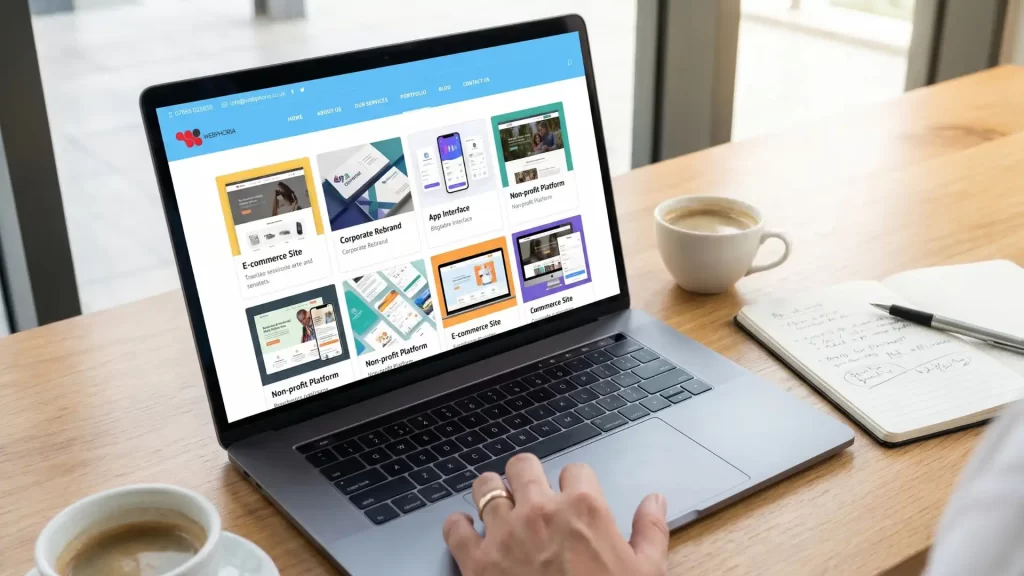
Every credible web design company UK will have a portfolio, but the key word is relevant. Don’t just glance at their homepage showcase — ask to see live websites they’ve built within the last 6 to 12 months. Review those sites for real-world performance: do they load quickly, work flawlessly on mobile, and guide visitors towards a clear action?
If your business is B2B, ask for B2B examples. If you need an online shop, make sure they have built functional e-commerce sites — ideally in your sector. You’ll find that a well-presented portfolio with diverse, high-quality work is a strong signal of a capable and experienced team.
Red flag: an agency that can only show you password-protected previews, won’t share live URLs, or whose “recent” work is clearly several years old.
2. Who specifically will be working on my project?
This question catches more businesses off guard than almost any other. Some agencies win work with their senior team on the pitch, then hand the actual project over to junior staff or offshore contractors once the contract is signed. This can lead to communication gaps, quality inconsistencies, and unexpected delays.
When you choose a web design agency in the UK, ask for the names and roles of the people who will be designing, developing, and managing your project from start to finish. A transparent agency won’t hesitate to introduce you to the actual team.
3. What is your project management process and timeline?
A professional web design company UK should be able to walk you through their entire process with clarity. Look for a documented approach that typically moves through discovery, wireframing, design concepts, development, content integration, testing, and launch. Ideally, this is presented as a clear timeline — most quality projects run between 6 and 12 weeks depending on complexity.
Equally important: ask what happens if the project runs over schedule. Do they build buffer time into their timelines? Who is responsible if delays are caused by the client versus the agency? Clear answers here separate professional studios from those who are making it up as they go.
4. How do you approach SEO and site performance during development?
A beautifully designed website is worth very little if it loads slowly, doesn’t rank on Google, or fails basic technical health checks. Before you choose a web design agency in the UK, confirm that SEO is built into their process — not bolted on as an afterthought or sold as a separate add-on after launch.
Ask specifically about:
- Core Web Vitals and Google PageSpeed performance targets
- On-page SEO foundations: clean URL structures, meta titles, header hierarchy, and image compression
- Schema markup and structured data implementation
- Accessibility compliance (WCAG standards)
A good starting point for understanding what your finished site should achieve is Google’s PageSpeed Insights tool — any reputable agency should be familiar with it and aiming for strong scores on both mobile and desktop.
5. Will the website be built on a CMS I can manage myself?
Once your site is live, you’ll want to update content — change a price, upload a blog post, add a new team member — without paying an agency hourly rate every time. Ask whether the site will be built on a user-friendly content management system (CMS) such as WordPress or Shopify, and confirm that you’ll receive proper training to use it.
Also ask whether they build fully custom themes or reskin pre-purchased templates. Both approaches have their place, but understanding what you’re actually getting helps you assess whether the quoted price is fair. A bespoke build naturally costs more — and should deliver more flexibility and performance in return.
If you’re planning to sell products online, be sure to look at their e-commerce website design experience specifically, as e-commerce CMS requirements are quite different from standard brochure sites.
6. Who owns the code, domain, and all website assets after launch?
Ownership is one of the most important — and most frequently overlooked — questions when deciding how to choose a web design agency in the UK. Once the project is complete and paid for in full, you should own everything: the website code, the domain name, the design files, and all imagery produced for the project.
Some agencies retain ownership of the source code as leverage to keep you on a maintenance contract. Others register your domain in their own name. If you ever decide to move to a different agency, you need to be able to take your entire site with you without legal complications or additional costs. Get this confirmed in writing before signing.
7. What happens after launch? Do you offer ongoing support and maintenance?
A website is not a one-off transaction — it’s an ongoing digital asset that needs regular attention. Platforms like WordPress require security updates, plugin maintenance, and periodic backups to remain secure and performant. Ask any web design company UK you’re considering what their post-launch support looks like.
Specifically, clarify:
- Whether maintenance is included in the project fee or charged separately
- What their typical response time is for urgent fixes or security issues
- Whether they offer hosting and whether it’s managed or self-managed
- How long post-launch bug fixes are covered under the original agreement
An agency that has no clear answer to these questions is one that doesn’t plan to be around for the long haul.
8. How many rounds of revisions are included in the project fee?
Revisions are one of the most common sources of conflict between businesses and agencies. Without a clear policy, what starts as a reasonable request can quickly escalate into scope creep — and a bill that far exceeds the original quote.
Ask upfront how many rounds of design amends are included for each stage (wireframes, visual design, development). Also ask how the agency defines “a round of revisions” — is it a list of consolidated feedback, or a single individual comment? Knowing the rules before you start saves a great deal of frustration later.
9. What is your strategy for a mobile-first experience?
The majority of UK users now browse on smartphones, and Google uses mobile-first indexing — meaning it predominantly uses the mobile version of a site to determine search rankings. When you choose a web design agency in the UK, confirm that mobile is treated as the primary design canvas, not as a responsive afterthought resized from a desktop layout.
Ask to see mobile previews of previous projects before the agency mentions desktop. Ask how they test across different screen sizes and operating systems. And check that their mobile designs genuinely simplify the user journey rather than simply squishing the desktop version into a narrower column.
This is also closely tied to branding consistency — if you’re investing in branding and logo design as part of your project, your identity needs to translate perfectly across every device size.
10. Can I speak to or contact any of your past clients?
Testimonials on an agency’s website are inherently curated — no one publishes their worst reviews. The real test is whether an agency is willing to offer verifiable references: real clients you can contact independently, ideally ones listed in their portfolio whose contact details you can find yourself.
When speaking with past clients, ask about communication during the project, whether the agency met its agreed deadlines, how they handled feedback and revisions, and what the post-launch experience has been like. Honest answers to those four questions will tell you more than any sales pitch.
What to watch out for when shortlisting agencies
Beyond the ten questions above, there are a few broader patterns worth bearing in mind as you evaluate any web design company UK. The digital agency market in the UK is large and varied — from one-person freelancers to multi-discipline studios — and not all agencies are equal in terms of quality, transparency, or long-term reliability.
Be cautious if an agency:
- Gives vague or evasive answers about SEO or technical performance
- Pressures you to sign quickly or offers a significant discount for immediate commitment
- Quotes significantly below £2,000 for a “bespoke” website (this almost always indicates a template reskin)
- Cannot clearly explain what platform they build on or who will own the finished site
- Has no process documentation or relies entirely on verbal commitments
Prioritise agencies that demonstrate technical competence across security, performance, and compliance (including GDPR and accessibility), and that show a genuine interest in understanding your business goals — not just your aesthetic preferences. You’ll be working closely with this team for months, so communication style and approachability matter as much as capability.
Making the right choice for your business
Knowing how to choose a web design agency in the UK comes down to asking the right questions and paying attention to how confidently and honestly those questions are answered. The questions above are not intended to trip agencies up — they’re the foundation of a productive working relationship built on clarity and mutual understanding.
A reputable agency will welcome detailed questions. They’ll be able to walk you through their process, show you real results, introduce you to your project team, and give you honest timelines based on actual experience. If an agency struggles to answer the basics, that’s your answer too.
If you’d like to see what a transparent, conversion-focused approach looks like in practice, the web design services at Webphoria are built around exactly the kind of clarity, ownership, and long-term support that every business deserves from their digital partner.
Ready to hire a web design agency in the UK but worried about making the wrong choice?
Investing in a new business website is a critical milestone, yet many companies find themselves tied to restrictive contracts, hidden fees, or templates that fail to convert. If you do not know the right performance, security, and ownership questions to ask upfront, you risk overspending on a digital platform you do not fully own.
Our team operates with total transparency, delivering bespoke, conversion-focused digital strategies, full asset ownership, and continuous performance support to ensure your partnership with a web design company UK is built for long-term growth.