
Do you actually need a mobile app — or would a better website do the same job for less?
Do you actually need a mobile app — or would a better website do the same job for less?
When it comes to the mobile app vs website debate, many business owners assume that having an app makes them look more professional or ahead of the curve. But is that actually true? Before investing thousands in app development, it is worth asking a more honest question: could a well-built, mobile-friendly website do exactly the same job — for a fraction of the cost?
The short answer, for most businesses, is yes. The longer answer depends on what your customers actually need, how often they interact with you, and what you are trying to achieve online. This article will help you work that out.
Why so many businesses rush into building an app
There is a certain prestige associated with having your own app on the App Store or Google Play. It feels like a milestone. But the reality is that most apps downloaded by users are opened once and never touched again. If your customers are not engaging with your product daily or weekly, an app becomes expensive digital clutter on their phones.
A dedicated mobile app typically costs anywhere between £25,000 and £100,000 to develop properly — and that is before ongoing maintenance, updates, security patches, and the separate versions you need for iOS and Android. For a small or medium-sized business, that budget can be transformational if spent elsewhere.
So what drives the rush? Usually it is a combination of competitor envy, tech hype, and a genuine desire to be more accessible to customers. Those are all understandable motivations. The problem is that an app is not always the best solution to those goals.
What a responsive website can actually do for your business
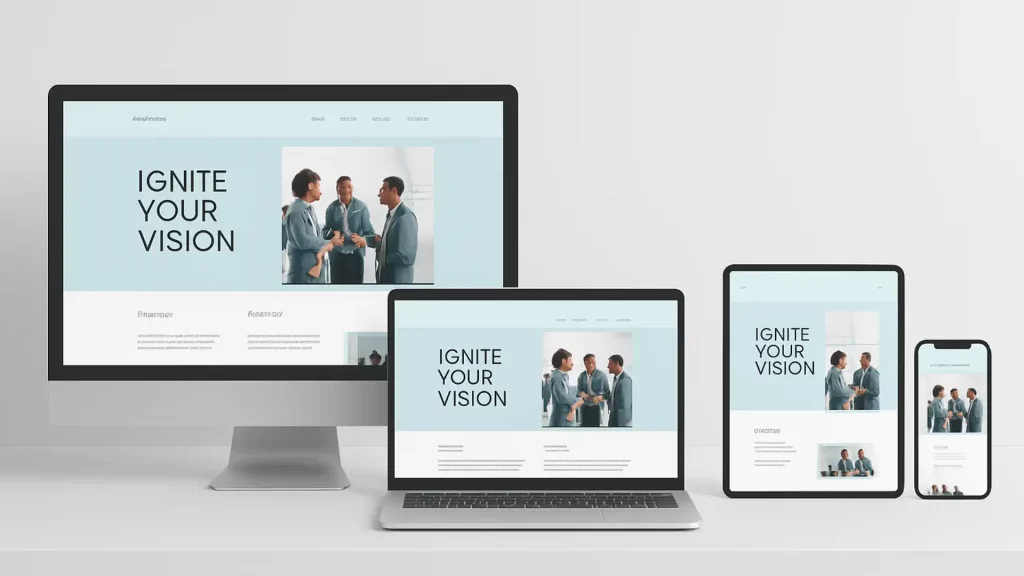
Modern responsive website design has come a long way. A well-built, mobile-optimised site today can do things that once required a native app — including fast load times, smooth navigation, click-to-call buttons, online booking, ecommerce, and even push notifications through Progressive Web App (PWA) technology.
If you are unsure what your current website is capable of, it is worth exploring the range of web design options available for businesses before assuming you need to start from scratch with a native app.
Here is where a responsive website for business genuinely outperforms an app:
- Search engine visibility — websites are indexed by Google. Apps are not. If discoverability is important to your business, a strong website will always win on SEO.
- Lower cost to build and maintain — one codebase works across all devices and operating systems, rather than separate app builds for iOS and Android.
- No friction for the user — customers can access your site instantly without needing to download, install, or update anything.
- Faster to update — changes go live immediately. App updates require store approval and user action.
Wider audience reach — not everyone will download your app, but almost everyone can visit a website.
When does a mobile app actually make sense?
There are genuine use cases where a native app is the smarter investment. The key question to ask is: how often will my customers be using this, and what do they need to do?
A mobile app makes sense when:
- Your users need to interact with your product daily or multiple times per week — for example, a fitness tracker, a banking tool, or a loyalty programme.
- You rely heavily on native device features such as GPS, camera scanning, Bluetooth, or biometric authentication.
- You need offline functionality — where users must access data or complete tasks without an internet connection.
- Push notifications are central to your business model, and you need higher open and engagement rates than browser-based notifications offer.
- More than 70% of your transactions or interactions happen on mobile, and your users expect a faster, more tailored experience than a website can offer.
For most local businesses, service providers, retailers, and professional firms, none of these criteria apply. The majority of their customers visit their website a handful of times per year — to check services, make a booking, or get in touch. An app would simply go unused.
The middle ground: progressive web apps
If you want the performance and feel of an app without the full cost, a Progressive Web App (PWA) is worth exploring. PWAs run inside the browser but can be “installed” on a user’s home screen, send push notifications, and load quickly even on slower connections.
Brands like Starbucks and Adidas have used PWA technology to deliver fast, app-like experiences without requiring a download. This approach gives you the best of both worlds — the search engine visibility of a website combined with some of the engagement features of an app — at a much more accessible price point.
If your business is looking to create a stronger mobile presence, a professionally built mobile website can incorporate many of these features and give your users a seamless experience across every device.
The real cost comparison: mobile app vs website
Development costs
To build a basic native app for both iOS and Android, you are typically looking at £25,000 at a minimum — and that figure rises sharply with complexity. A well-designed, fully functional responsive website, by contrast, can be built for a fraction of that cost while delivering a professional, effective online presence.
Ongoing costs
Apps require continuous updates for new OS versions, security vulnerabilities, and changing user expectations. Each update needs to be pushed to both app stores and accepted by users. A website, however, can be updated centrally and maintained far more efficiently. When you factor in the long-term cost of ownership, the gap widens considerably.
ROI for small and medium businesses
For most SMEs, the return on investment from a high-quality, SEO-optimised responsive website will almost always outperform an app. A website that ranks on Google brings in new customers consistently. An app only serves people who have already committed enough to download it.
Pairing a strong website with effective search engine optimisation is typically the most cost-effective way to grow your online visibility and attract new customers — without the overhead of app development.
Signs that your website needs improving before you think about an app
Before considering an app, ask yourself whether your current website is performing as well as it could. Many businesses that feel they “need an app” actually need a better website first. Look out for these warning signs:
- Your website does not load quickly on mobile — Google’s data shows that 53% of users abandon a site that takes longer than three seconds to load.
- Your navigation is difficult to use on a small screen, forcing users to pinch and zoom.
- Your bounce rate is high — visitors arrive but leave almost immediately.
- You have no clear calls to action, making it hard for visitors to book, buy, or get in touch.
- Your site is not indexed properly by Google, meaning it is not bringing in any organic traffic.
All of these issues are solvable with good responsive website design — and fixing them will have a far greater impact on your business than launching an app that most of your customers will never download.
If you are selling online, it is also worth considering whether your ecommerce setup is fully optimised for mobile users. A streamlined, mobile-friendly checkout process can make a significant difference to your conversion rate.
A practical way to think about your decision
If you are still weighing up the mobile app vs website question, here is a straightforward way to frame it. Ask yourself: would my customers want to open this every week, or only once or twice a year?
If the answer is weekly or more, an app may be worth investigating. If the answer is occasionally or rarely, a high-performing responsive website for business is almost certainly the smarter investment. Start there, build your audience, and let real usage data guide any future decisions about going further with app development.
For a broader perspective on how different businesses approach this decision, this analysis from Etnetera Flow offers a useful breakdown of the mobile web vs app question across different industries and business models.
Not sure what the right option is for your business?
Getting this decision right from the start saves a great deal of time, money, and frustration. At Webphoria, we build bespoke websites designed to work brilliantly on every device — fast, functional, and built to convert. Whether you need a clean brochure site, a fully featured ecommerce platform, or a mobile-optimised presence that rivals the experience of a native app, we can help you find the right solution for your goals and your budget.
Take a look at our full range of web design and development services to see what is possible — and get in touch to discuss your project.
Not sure whether your business really needs a mobile app?
Many businesses invest in app development before their website is doing its job properly. In many cases, a fast, mobile-optimised responsive website delivers better results at a lower cost and with far wider reach. We help businesses decide whether to improve their website, build a Progressive Web App, or develop a native mobile app based on what their customers actually need.