
WhatsApp Chatbot for Small Businesses: What It Is and Why It Works
WhatsApp Chatbot for Small Businesses: What It Is and Why It Works
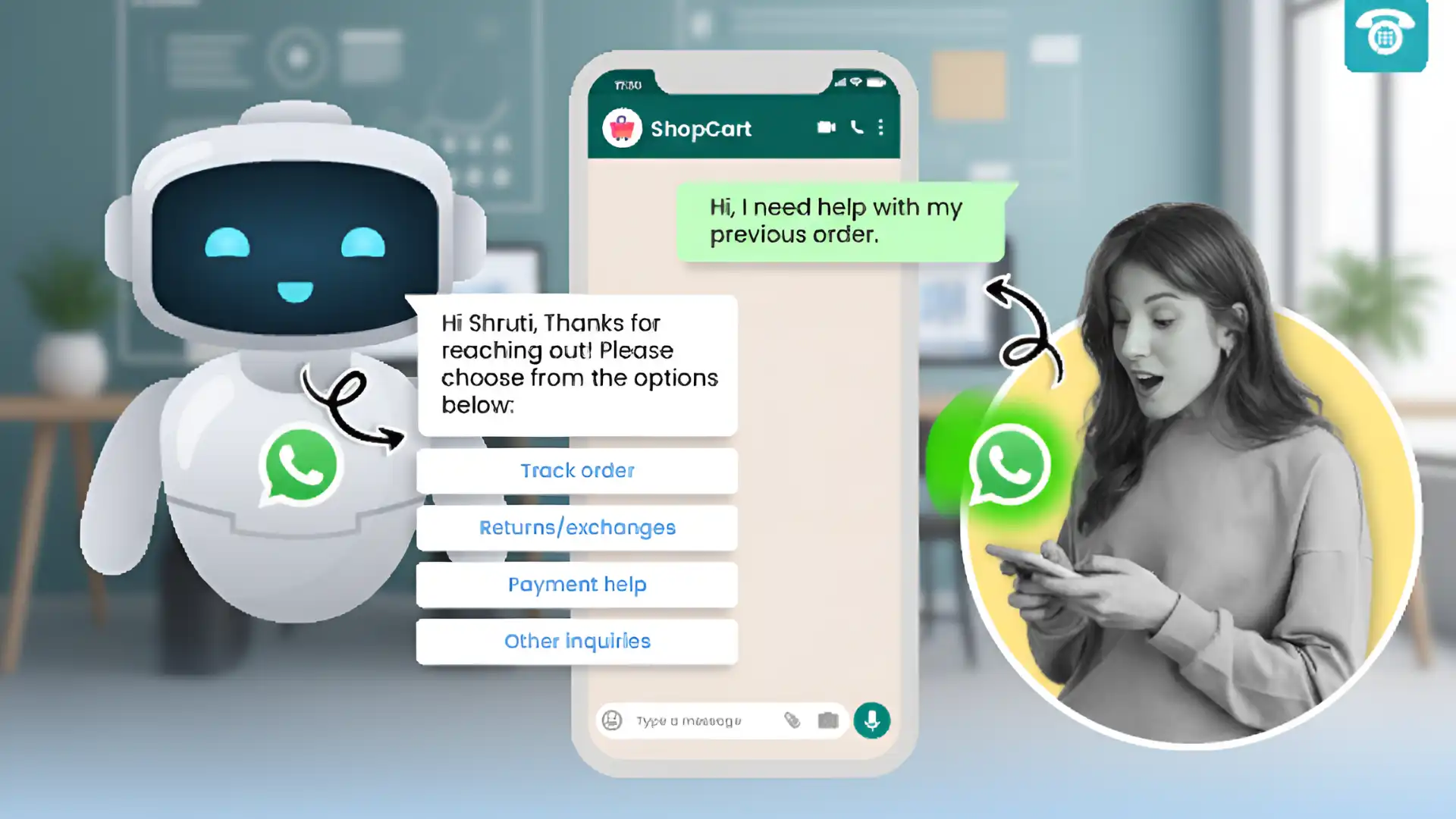
A WhatsApp chatbot for small businesses is an automated messaging assistant that responds to customer enquiries instantly through WhatsApp. It can answer common questions, capture leads, send reminders, and even guide customers through bookings — all without manual input.
For small businesses, speed matters. Customers expect quick replies, especially when messaging. If they don’t get one, they often move on.
That’s where a WhatsApp chatbot becomes powerful. It keeps conversations flowing even when you’re busy, closed, or handling other tasks.
What Is a WhatsApp Chatbot?
A WhatsApp chatbot is an automated system built on WhatsApp Business that can send and receive messages using pre-set logic, AI responses, or structured conversation flows.
Instead of manually replying to every message, the chatbot handles predictable interactions automatically. It can:
- Greet customers instantly
- Provide service information
- Share pricing ranges
- Qualify leads
- Book appointments
- Route complex enquiries to staff
Top-performing chatbot guides consistently emphasise 24/7 responsiveness, automation, and improved conversion rates as key benefits.
For small businesses without large teams, this kind of automation can level the playing field.
Why WhatsApp Works So Well for Small Businesses
WhatsApp is one of the most widely used messaging platforms in the UK and globally. Customers already trust it, use it daily, and prefer messaging over calling in many cases.
When a small business integrates a WhatsApp chatbot, it meets customers where they already are.
There are three main reasons why it works particularly well:
1. Immediate Response Builds Trust
Speed influences perception. A customer who receives an instant response feels acknowledged and valued. Even if the chatbot simply confirms that someone will follow up shortly, the conversation has started.
2. Messaging Feels Less Formal Than Email
Customers are often more comfortable asking quick questions via WhatsApp. That reduces friction in the buying process.
3. Conversations Stay Organised
Unlike phone calls, WhatsApp chats create a written record. This helps with follow-ups, quoting accuracy, and service consistency.
How a WhatsApp Chatbot Actually Works
A WhatsApp chatbot for small businesses operates through structured conversation flows. These flows are designed around your most common customer interactions.
For example:
- A customer sends “Hi, do you offer repairs?”
- The chatbot responds with service options.
- It asks a qualifying question (location, timeframe, urgency).
- It either books a slot or collects details for a callback.
More advanced setups can integrate with booking systems, CRMs, and marketing tools. This means conversations don’t just end in chat — they become actionable data.
At Webphoria, WhatsApp chatbot setups are designed around real customer journeys rather than generic templates. If you want to see how structured WhatsApp automation works in practice, you can explore Webphoria’s dedicated WhatsApp integration services.
Key Benefits of a WhatsApp Chatbot for Small Businesses
While the technology is impressive, the real value lies in outcomes.
Higher Lead Conversion
If you respond instantly, you reduce drop-off. Many customers contact multiple businesses at once. The fastest response often wins.
Reduced Admin Time
Instead of manually replying to repetitive questions (“What are your hours?”, “How much does it cost?”, “Do you cover my area?”), the chatbot handles them automatically.
24/7 Availability
Customers message outside business hours. A WhatsApp chatbot ensures they still receive helpful responses.
Structured Lead Capture
Instead of vague enquiries, you collect organised information such as postcode, budget, service type, or preferred dates.
Consistent Brand Messaging
The chatbot delivers consistent responses every time, aligned with your brand voice and service positioning.
Top-ranking chatbot content consistently highlights automation, efficiency, and customer experience improvements as primary drivers of ROI

Common Use Cases
A WhatsApp chatbot for small businesses can be adapted to many industries.
Trades & Home Services
- Quote requests
- Emergency call triage
- Booking confirmations
- Follow-up reminders
Beauty & Wellness
- Appointment scheduling
- Availability updates
- Cancellation handling
Professional Services
- Initial enquiry qualification
- Consultation booking
- Document request automation
E-commerce
- Order tracking
- Product recommendations
- Abandoned cart reminders
Webphoria works with businesses across sectors to implement tailored automation flows. You can see examples of previous digital projects in the Webphoria portfolio.
What Makes a Good WhatsApp Chatbot?
Not all chatbots are equal. Poorly built bots frustrate customers. Well-built ones feel natural and helpful.
A strong WhatsApp chatbot should:
- Use conversational language
- Provide clear options without overwhelming the user
- Offer easy handover to a human
- Avoid long, robotic scripts
- Collect useful information efficiently
Top-ranking industry resources consistently emphasise conversational design and intelligent handoff as critical success factors.
The difference between a “basic auto-reply” and a strategic chatbot is thoughtful flow design.
Does a WhatsApp Chatbot Replace Human Interaction?
No — and it shouldn’t.
A WhatsApp chatbot works best as a first responder. It handles routine queries, captures structured details, and qualifies leads before passing them to a team member when necessary.
For complex or sensitive conversations, human involvement remains essential.
The real advantage is efficiency. Your team only steps in when their expertise is required.
How to Implement a WhatsApp Chatbot the Right Way
The success of a WhatsApp chatbot for small businesses depends heavily on setup.
It’s not just about switching it on. It requires:
- Mapping common customer journeys
- Identifying repetitive enquiries
- Designing structured conversation flows
- Integrating booking or CRM systems
- Testing real-world scenarios
This is where professional implementation matters. A poorly structured chatbot can confuse users and reduce trust.
If you’re considering adding WhatsApp automation to your customer communication strategy, reviewing Webphoria’s broader digital services can help you see how messaging integrates into wider marketing and automation systems.
Measuring ROI From a WhatsApp Chatbot
Return on investment often becomes visible quickly.
You can track:
- Reduction in missed enquiries
- Increase in booking conversions
- Faster response times
- Reduced admin hours
- Higher customer satisfaction
For small businesses operating with lean teams, even saving 5–10 hours per week can justify the system.
More importantly, capturing just a few additional high-value customers per month can dramatically outweigh implementation costs.
Is a WhatsApp Chatbot Worth It for Small Businesses?
If your business:
- Receives frequent WhatsApp enquiries
- Struggles to respond quickly
- Handles repetitive questions daily
- Books appointments manually
- Misses messages outside working hours
…then the answer is usually yes.
A WhatsApp chatbot for small businesses doesn’t just automate responses — it improves how customers experience your brand.
Final Thoughts
A WhatsApp chatbot for small businesses is no longer a novelty. It’s a practical tool for improving responsiveness, increasing conversion rates, and reducing manual admin.
When built strategically, it becomes an extension of your customer service team — available 24/7, consistent, and efficient.
The key is thoughtful design and proper integration. That’s where the difference between “automation” and “effective automation” lies.
If you’re exploring how WhatsApp messaging could work within your business, you can contact Webphoria to discuss a tailored approach that aligns with your goals and customer journey.
Ready to turn WhatsApp into a lead and booking channel?
If you’re receiving customer messages but struggling to respond quickly, a structured WhatsApp chatbot can capture enquiries, qualify leads, and guide customers to book automatically. Webphoria designs practical WhatsApp automation that supports real business growth — not just messaging.