
E-commerce Architecture Built for Growth, Not Just Launch
Launching an online store is one thing. Building one that can grow without breaking, slowing down, or becoming difficult to manage is a different challenge. A scalable e-commerce architecture gives your store the structure it needs to support more products, higher traffic, more orders, third-party integrations, automation workflows, and future platform improvements.</p> <p>At Webphoria, we help businesses plan and build e-commerce systems that are cleaner, more organised, and easier to grow. This includes product catalogue structure, checkout flow, backend workflows, performance planning, platform setup, integrations, analytics, and the operational systems behind the store.</p> <p>Google’s Core Web Vitals guidance highlights loading performance, interactivity, and visual stability as real-world user experience metrics, which matters for e-commerce stores where slow or unstable pages can damage the buying journey.
What We Help You Fix With E-commerce Architecture
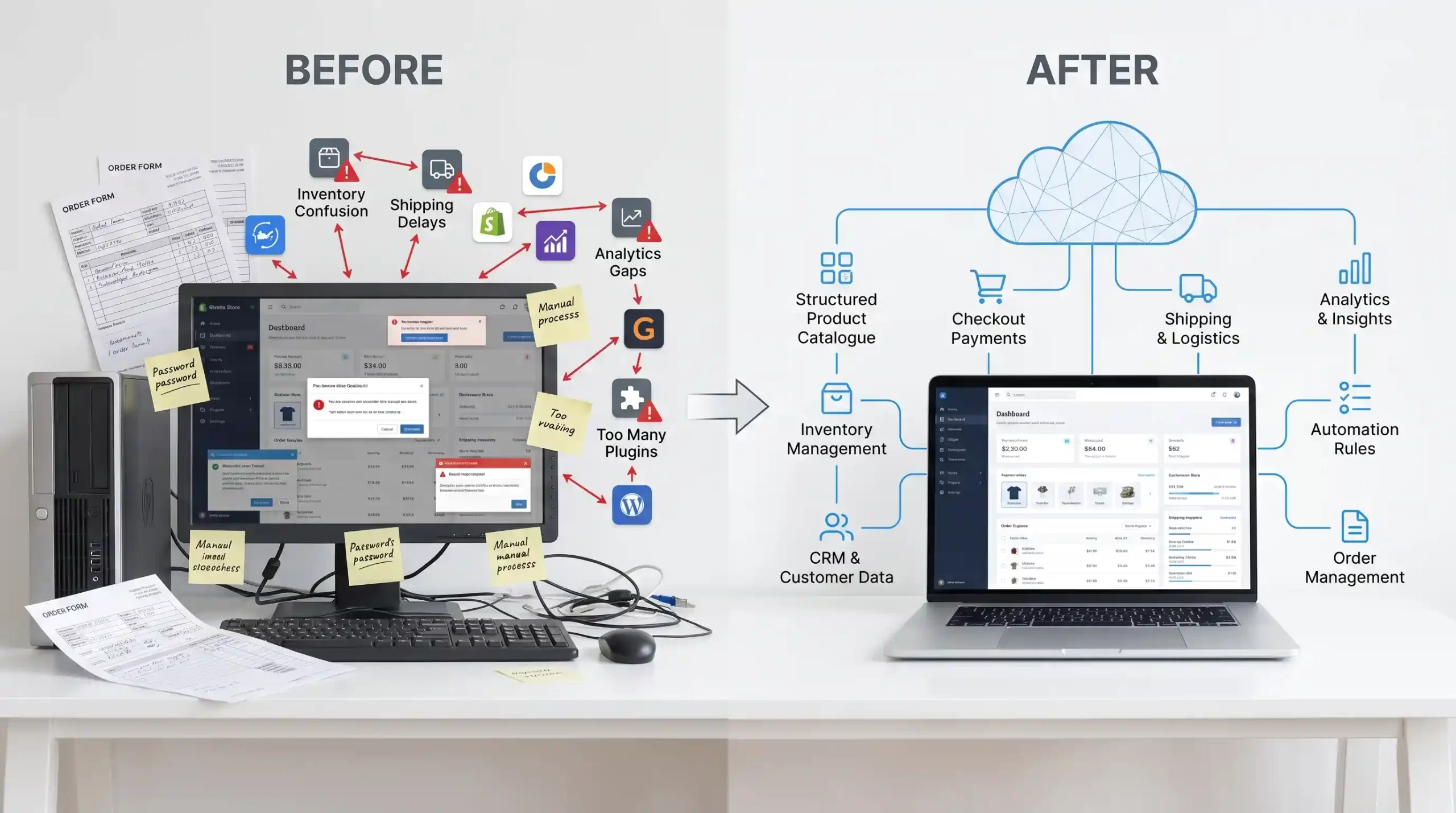
Many online stores start simple but become messy as the business grows. More products get added, more apps or plugins are installed, checkout rules become more complex, customer data becomes scattered, and manual processes start slowing the business down.
What’s Included in Scalable E-commerce Architecture
We plan and structure the important parts of your e-commerce system so your store can grow without becoming slow, confusing, or difficult to manage.
Product Catalogue Architecture
A clear product structure for categories, collections, filters, variants, product attributes, stock rules, and future product expansion.
Checkout & Order Flow Planning
Checkout, payment, shipping, tax, and order confirmation workflows planned around the way your business sells and fulfils orders.
Integration Planning
A structure for connecting the store with CRM systems, email marketing, analytics, shipping tools, inventory systems, automation workflows, and customer communication channels.
Performance Planning
E-commerce performance planning around page speed, image handling, mobile experience, frontend structure, caching, hosting, and unnecessary plugin or app bloat.
Platform Scalability
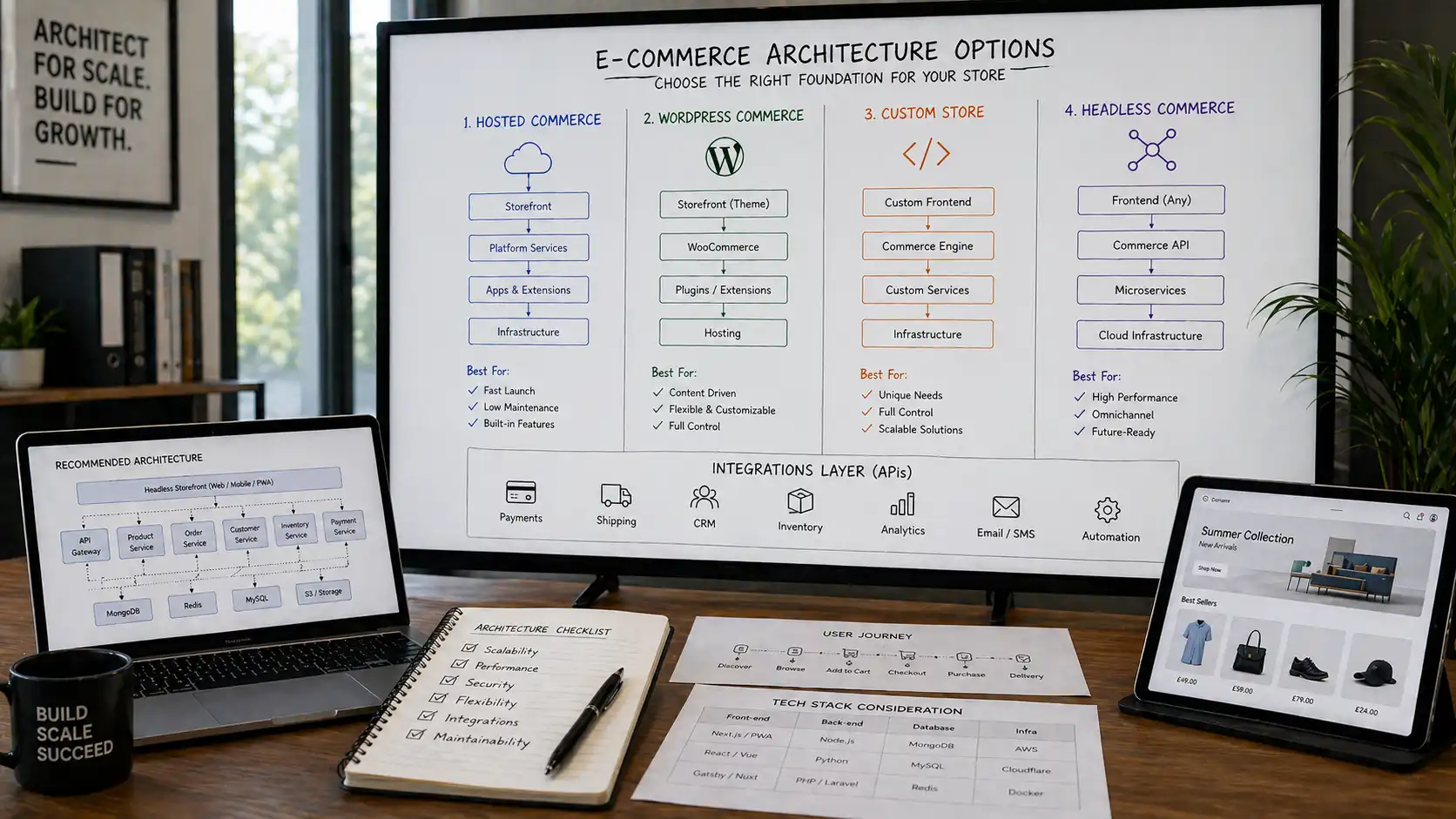
Guidance around whether Shopify, WooCommerce, custom e-commerce, or headless architecture makes sense for your store’s current stage and future growth.
Automation-Ready Workflows
Operational workflows designed to reduce manual work around order notifications, customer updates, fulfilment, abandoned cart flows, stock alerts, and reporting.
Data & Analytics Structure
Tracking and reporting setup planning so the business can measure sales, conversion performance, traffic sources, product performance, checkout behaviour, and customer journeys.
Future Growth Planning
A roadmap for handling more products, more customers, more marketing campaigns, more integrations, and more advanced store features over time.
Need an E-commerce Store That Can Grow Without Becoming Messy?
Why Scalable E-commerce Architecture Matters
A poorly structured e-commerce store may work at the beginning, but growth exposes weaknesses quickly. More products, more customers, more traffic, and more integrations can create performance issues, operational delays, and poor customer experience if the architecture is not planned properly.
How Our E-commerce Architecture Process Works
Store & Workflow Review
We review your current store structure, product catalogue, checkout flow, integrations, backend tools, manual workflows, performance issues, and future growth goals.
Architecture Planning
We map the ideal structure for your products, pages, checkout, payments, shipping, CRM, email, automation, analytics, and operational workflows.
Build, Improve & Optimise
We implement the architecture improvements, connect key systems, clean up unnecessary complexity, and prepare the store for better long-term performance.
Key Areas of Scalable E-commerce Architecture
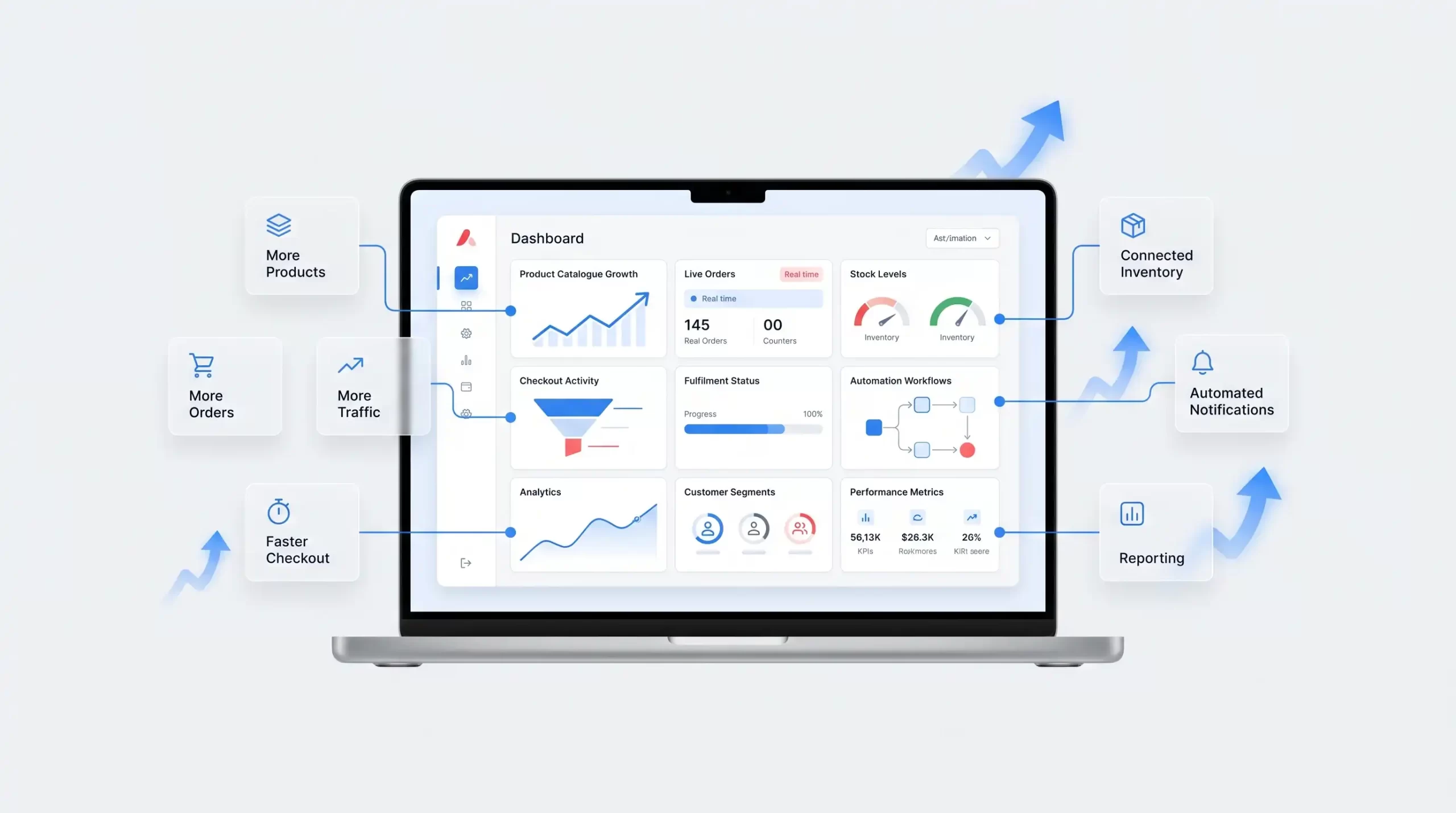
A scalable online store is not just a website. It is a connected system made up of customer-facing pages, backend operations, platform settings, integrations, automation, and data.
Architecture for Shopify, WooCommerce, and Custom E-commerce Stores
We can plan scalable e-commerce architecture for Shopify stores, WooCommerce stores, and custom e-commerce websites. The right structure depends on your store size, product complexity, integrations, team capability, budget, and growth plans.</p> <p>For Shopify, architecture usually focuses on store setup, theme structure, app selection, checkout settings, product catalogue organisation, sales channels, fulfilment workflows, and automation. Shopify also promotes headless commerce for brands that need more custom experiences across different digital touchpoints.</p> <p>For WooCommerce, architecture usually focuses on WordPress structure, plugin control, hosting quality, database load, product catalogue setup, checkout configuration, caching, security, and long-term maintainability.</p> <p>For custom e-commerce websites, architecture may include frontend/backend separation, API planning, database structure, payment provider integration, inventory sync, microservices, cloud hosting, and custom operational workflows. Google’s e-commerce microservices guidance describes retail applications where individual services handle specific tasks and are designed for scalability and traffic spikes.
Who Our Scalable E-commerce Architecture Service Is Built For
This service is ideal for businesses that already sell online or are planning a serious e-commerce build and need a store structure that can support growth.